
Are you struggling to find the right brake rotor for your ceramic pads? It's a common problem that can lead to poor braking performance and frustration.
For ceramic pads, the best rotors are high-carbon cast iron rotors, either in a plain-faced or a drilled and slotted design. These rotors are manufactured with a specific surface hardness and advanced cooling structures to manage heat effectively, ensuring smooth, quiet braking and a long service life.
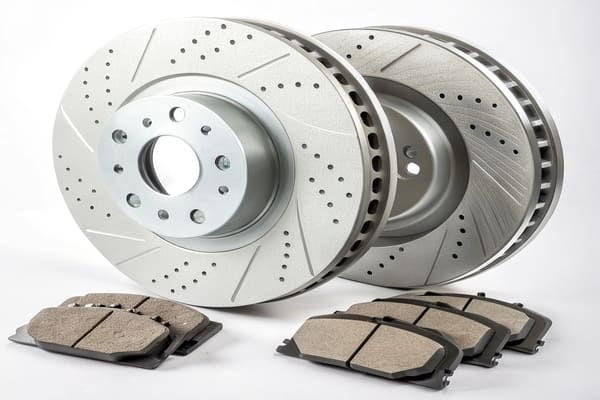
Pairing ceramic pads with the right rotor is more complex than most people think. It's not just about picking a rotor that fits; it's about a precise engineering match. The material, the surface treatment, and the cooling design all have to work together perfectly. If they don't, you won't get the quiet, low-dust performance that ceramic pads are famous for. Let's dive deeper into why this match is so critical and what you need to look for to get it right.
Can I use ceramic pads on regular rotors?
Thinking about upgrading to ceramic pads but keeping your standard rotors? This might seem like a simple swap, but it could lead to unexpected braking issues.
Yes, you can physically install ceramic pads on regular rotors, but it is not the ideal combination for performance or durability. Regular rotors often lack the specific surface hardness and thermal capacity needed to work optimally with ceramic pads, which can lead to uneven wear and reduced braking consistency.
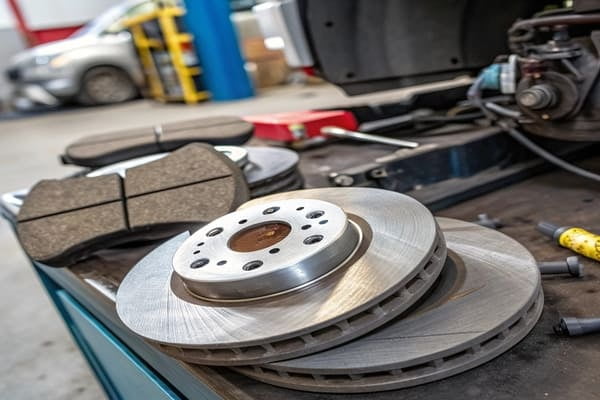
I learned this lesson the hard way early in my career. We had a project with a client from Pakistan who wanted to pair our ceramic pads with a standard cast iron rotor. At the time, I didn't fully grasp the complexity of the match. The result was a slight but noticeable "judder" during braking. The friction surfaces just weren't compatible. Luckily, the client actually preferred that feel, but it was a wake-up call for me. It taught me that the interaction between pad and rotor is a science. A standard rotor's surface isn't prepared for the way a ceramic pad lays down its transfer film. This leads to the issues we need to avoid.
Why the Mismatch Happens
The core of the problem lies in how the two components are made. Standard rotors are built for cost-effectiveness, not for the specific demands of high-performance friction materials.
- Surface Hardness: Ceramic pads work best on a rotor with a very specific and controlled surface hardness. Regular rotors usually have a uniform hardness that isn't optimized, causing the pad to wear the rotor unevenly.
- Heat Management: Ceramic pads generate heat differently than semi-metallic pads. A standard rotor's simple cooling vanes may not be able to dissipate this heat fast enough, leading to potential brake fade.
Comparing Rotor Compatibility
| Feature | Standard Rotor | Optimized Rotor for Ceramic Pads |
|---|---|---|
| Material | Standard G3000 Cast Iron | High-Carbon G3500 Cast Iron |
| Surface Prep | Basic Machining | Multi-stage Hardness Gradient Control |
| Heat Dissipation | Standard Vane Design | Engineered for High Thermal Loads |
| Expected Outcome | Potential for noise, judder, uneven wear | Smooth, quiet, consistent braking |
This is why, as an OEM/ODM supplier, we now insist on a complete system approach. We don't just sell a part; we engineer a solution where the pad and rotor are developed together to guarantee performance.
What type of brake rotor is best?
With so many options on the market, are you wondering which rotor type truly offers the best performance? The answer isn't always the one that looks the most aggressive.
The best brake rotor depends on your primary use. For most daily drivers using ceramic pads, a high-quality, high-carbon plain rotor is best. For performance driving, drilled and slotted rotors provide superior cooling, but their manufacturing quality is absolutely critical to prevent cracking.
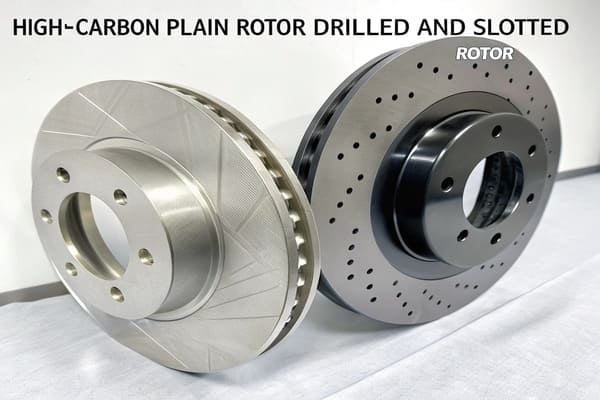
Choosing the "best" is about matching the rotor's design to its job. A race car's needs are very different from a daily commuter's. The key is understanding what each design feature does and how it affects braking with ceramic pads. This is a level of detail we obsess over in our product development. We've seen firsthand how a well-made plain rotor can outperform a poorly made drilled one. The quality of manufacturing, especially from specialized factories in regions like Fujian or near Shanghai, makes a huge difference compared to standard-precision facilities. Those factories have the machinery to control the crucial details.
Breaking Down Rotor Types
Let's look at the main categories and see where they fit.
- Plain Rotors: These have a smooth, solid surface. They offer the largest contact area for the brake pad, providing excellent initial bite and quiet operation. When made with high-carbon iron, they are perfect for daily driving and luxury cars.
- Drilled Rotors: Holes are drilled through the rotor surface to help vent hot gases and water, improving performance in wet conditions and under heavy braking. The main risk is cracking if not engineered and manufactured correctly.
- Slotted Rotors: Slots are milled into the rotor surface. They act like a squeegee, cleaning the pad surface and providing a consistent friction coefficient. They are more durable than drilled rotors but can create a slight whirring noise.
Performance vs. Application
| Rotor Type | Best For | Pros | Cons |
|---|---|---|---|
| Plain (High-Carbon) | Daily Driving, Comfort | Quiet, smooth, long life, great initial bite | Less effective at extreme temperatures |
| Drilled | Performance Street, Wet Climates | Excellent heat/gas/water dissipation | Can be prone to stress cracks if made poorly |
| Slotted | Aggressive Street, Light Track | Cleans pads, resists fade, durable | Can cause minor noise and faster pad wear |
| Drilled & Slotted | Performance Street, Aesthetics | Combination of benefits from both | Most complex to manufacture correctly |
For our B2B clients, we always start with the application. We then design the rotor, focusing on the right material and manufacturing process to deliver a reliable, high-performance product.
Are ceramic pads harder on rotors?
Have you heard the myth that ceramic pads are so aggressive they will chew through your rotors? This common misconception might be stopping you from making a great upgrade.
No, ceramic pads are actually much gentler on brake rotors than semi-metallic pads. Their unique formulation is less abrasive, which results in significantly less rotor wear over time. This also produces far less brake dust, keeping wheels cleaner for longer.
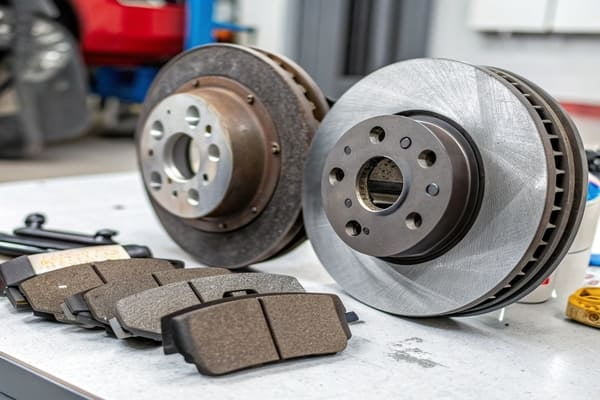
The confusion comes from a misunderstanding of how ceramic pads work. They don't scrape away rotor material to create friction. Instead, they operate on an "adherent" friction principle. They lay down an ultra-thin, even layer of friction material onto the rotor surface. The braking force is then generated by the friction between the pad and this transfer layer. This process is much less abrasive than the "abrasive" friction of a semi-metallic pad, which grinds against the bare metal of the rotor. The real challenge with ceramic pads isn't abrasion; it's heat.
The Real Challenge: Thermal Management
Ceramic pads are excellent at maintaining a stable friction level across a wide range of temperatures, but they also transfer a lot of heat into the rotor. If the rotor isn't designed to handle this, problems can arise.
- Ventilation Structure: This is the most critical design element for a rotor paired with ceramic pads. During our R&D, we spend countless hours analyzing thermal fade test data. This data tells us exactly where hot spots form and how to design the internal cooling vanes to pull air through the rotor most efficiently.
- Material Stability: We use high-carbon iron because it has superior thermal stability. It resists warping and distortion even after repeated high-temperature braking cycles, which is essential for maintaining a smooth pedal feel and preventing judder.
Pad Abrasiveness Comparison
| Pad Type | Abrasiveness | Rotor Wear | Brake Dust |
|---|---|---|---|
| Organic | Low | Low | Moderate |
| Semi-Metallic | High | High | High (dark, sticky) |
| Ceramic | Very Low | Very Low | Low (light color, non-stick) |
So, you can be confident that upgrading to ceramic pads will actually extend the life of your rotors, as long as the rotors are designed to manage the heat properly. This is the core of our OEM/ODM service: engineering components that work in perfect harmony.
Can you use ceramic pads on drilled and slotted rotors?
Are you aiming for the ultimate combination of street performance, low dust, and great looks? Pairing ceramic pads with drilled and slotted rotors might be exactly what you're looking for.
Yes, using ceramic pads on drilled and slotted rotors is an excellent and very popular combination. The design of the rotor helps dissipate the heat that ceramic pads generate, while the pads provide quiet, clean, and consistent stopping power. It's a perfect match for performance-oriented vehicles.
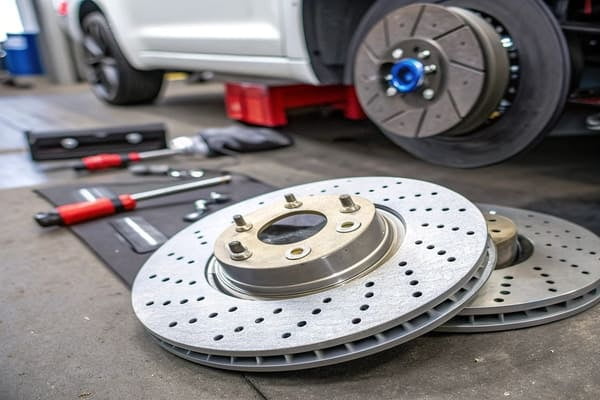
This pairing brings together the best of both worlds. The advanced design of a drilled and slotted rotor directly addresses the main byproduct of ceramic pad operation: heat. By constantly clearing away heat, gases, and debris from the braking surface, the rotor ensures the ceramic pad can operate in its ideal temperature range. However, this high-performance synergy is only possible when the rotor is manufactured to exacting standards. A cheap, poorly made drilled and slotted rotor is a liability. A professionally engineered one is a masterpiece of performance and safety.
The Three Pillars of a Perfect Match
Creating a drilled and slotted rotor that works flawlessly with ceramic pads requires mastery of at least three critical manufacturing stages.
- 1. Advanced Material Formulation: It all starts with the right raw material. We use a high-carbon G3500 cast iron blend. This provides the necessary thermal stability to prevent warping and the structural integrity to handle the stresses of a drilled and slotted design.
- 2. Precision CNC Machining: The holes and slots are not just added randomly. Their pattern, angle, and depth are precisely calculated and machined to optimize cooling and structural strength without creating weak points that could lead to cracks.
- 3. Friction Surface Hardness Control: This is the most difficult and crucial step. We use a proprietary, multi-stage process to create a hardness gradient on the rotor's friction surface. This ensures the surface is perfectly conditioned to accept the transfer film from a ceramic pad, guaranteeing smooth engagement and preventing judder for the life of the components.
This level of manufacturing precision is what separates a world-class OEM/ODM supplier from a standard factory. It's the reason we can confidently supply these advanced braking systems to our global partners.
Conclusion
Pairing the right rotor with ceramic pads requires a focus on material science, thermal design, and manufacturing precision. This ensures you get the best performance, safety, and longevity.