
Are you confused by all the different brake pad options? Choosing the wrong one can lead to noise or poor performance. Understanding the materials inside is the first step.
Brake pad materials differ mainly in their composition, such as ceramic, semi-metallic, or low-metallic formulas. These ingredients directly impact stopping power, noise, brake dust, and lifespan. The best choice depends on the vehicle, your driving habits, and what you prioritize in performance.
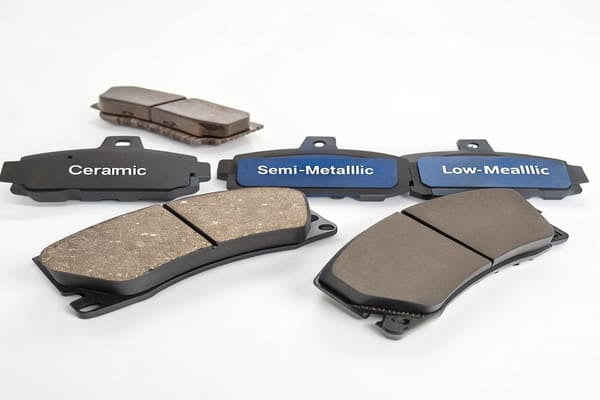
Choosing a brake pad isn't just about picking a brand off the shelf. The science behind what makes them work is surprisingly deep, and the differences are bigger than you might think. We deal with these materials every day, from development to manufacturing, and I want to break down what really matters. Let's look closer at the questions our clients ask us all the time, so you can make a better choice for your business or your vehicle.
What is the best friction material for brake pads?
Everyone wants to find the single "best" brake pad. But this search often leads to a poor match, because "best" means different things for different drivers and vehicles.
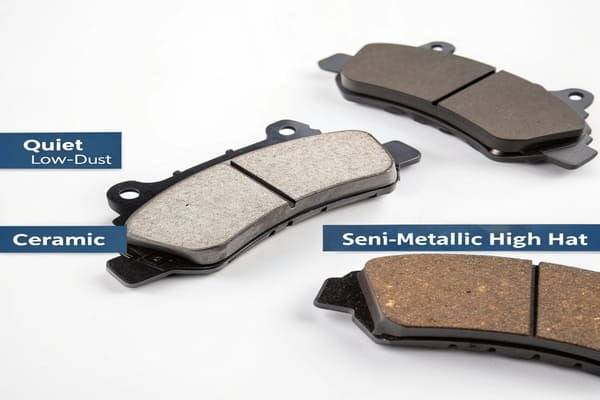
There is no single "best" material for all situations. Ceramic pads are quiet and produce little dust, making them great for daily commuters. Semi-metallic pads offer superior performance under high heat, which is ideal for heavy-duty trucks or performance driving. The best choice is a balance.
When we develop brake pads for our OEM clients, the first question is never "what's best?" but "what is the application?" A luxury sedan needs a pad that is silent and clean. A fleet of delivery trucks needs a pad that resists heat and lasts a long time. These are two very different goals. The challenge for us as manufacturers is matching the right formula to the right vehicle. This requires deep access to the vehicle's braking system data, which can be a complex process during research and development. It’s a careful balancing act. For most people, the "best" pad is one that meets their specific needs without introducing new problems like noise or excessive rotor wear.
Here is a simple breakdown of the most common types:
| Material Type | Primary Benefit | Common Drawback | Best For |
|---|---|---|---|
| Ceramic | Quiet, low dust, long life | Lower initial bite, higher cost | Daily driving, luxury cars |
| Semi-Metallic | Excellent heat dissipation, strong bite | Noisy, more dust, hard on rotors | Performance driving, towing |
| Low-Metallic | Good performance, less noise than semi-metallic | More dust than ceramic | General purpose, wide range of vehicles |
What is the difference between brake pad materials?
Brake pads can look almost identical on the outside. This makes it hard to understand why their prices and performance levels are so different. Let's look at what's inside.
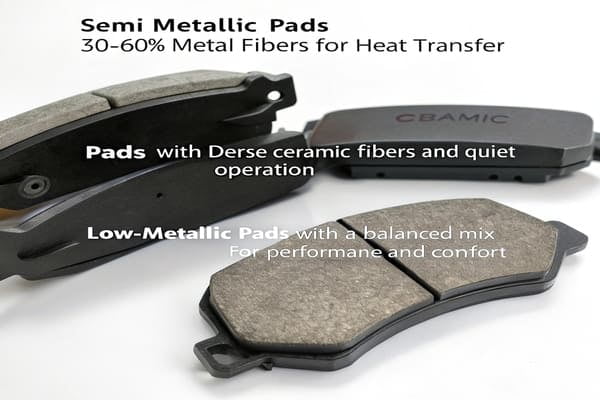
The main difference is their core ingredients. Semi-metallic pads contain 30-60% metal fibers for heat transfer. Ceramic pads use dense ceramic fibers and non-ferrous fillers for quietness. Low-metallic pads use a mix with less metal, balancing performance and comfort.
Telling these formulas apart is extremely difficult, even for us. The truth is, you can't do it by eye. We have to use highly specialized testing equipment. A simple test bench just doesn't have the precision needed. For a real comparison, we need to run at least three major tests. The most challenging one is mapping the friction coefficient against the heat fade curve. This test tells us exactly how the pad will perform as it gets hotter. This kind of high-precision equipment isn't common. You usually only find it in dedicated braking R&D centers, like the ones we work with near Shanghai or in the Fujian coastal region. Simpler test setups, which you might find elsewhere, just can't deliver the data we need to guarantee performance. This is why a professionally developed formula is so different from a generic, low-cost alternative.
The Science of the Formula
A brake pad formula is a recipe with over a dozen ingredients, including:
- Abrasives: To help grip the rotor.
- Fillers: To add bulk and reduce cost.
- Binders: Resins that hold everything together.
- Friction Modifiers: Graphite and other materials to control performance.
Changing any one of these can completely alter how the brake pad feels and performs.
What brake pads have the highest friction?
You want the absolute strongest stopping power you can get. But chasing the highest friction rating might lead to other problems you didn't expect, like noise or extreme wear.
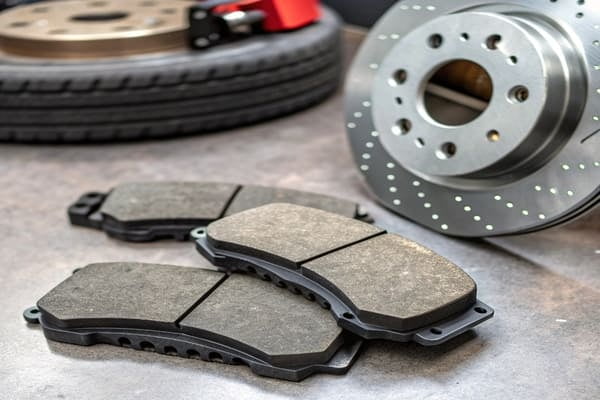
Typically, semi-metallic and specialized racing compound brake pads have the highest friction coefficient. However, this aggressive stopping power usually creates more noise, produces more dust, and wears down brake rotors much faster. It is a direct trade-off between raw power and daily comfort.
High friction isn't always the goal. What matters more is stable friction across a wide range of temperatures. A pad with a very high friction coefficient when cold might fade dangerously when it gets hot. This is called heat fade, and it's what our advanced testing is designed to detect. I learned this lesson early on. The first time we developed a custom brake pad formula for a client in Pakistan, we ran into an issue. After installation, the feedback was that the pads felt "soft" and had some "abnormal noise." I was worried we had failed. But it turned out the client actually preferred that feeling. It was less aggressive and felt more controllable for their local driving conditions. It taught me that the "highest friction" isn't the same as the "best performance" for the customer. The goal is predictable, reliable stopping power that matches the driver's expectation.
What is the 30 30 30 rule for brakes?
You just installed brand new brake pads and rotors. If you don't bed them in correctly, you won't get the performance you paid for. Here's a simple rule to follow.
The 30-30-30 rule is a simple method for bedding-in new brakes. It involves doing 30 gentle slowdowns from 30 mph, with about 30 seconds of cooling time between each one. This process helps create a perfect mating surface between the pad and the rotor.
Bedding-in is one of the most important and most overlooked steps. It isn't about testing the brakes; it's about conditioning them. The goal is to transfer a thin, even layer of friction material from the new brake pad onto the metal surface of the brake rotor. This transfer layer is what creates the ideal friction surface for smooth, powerful, and quiet braking. When following the 30-30-30 rule, it is very important that you do not come to a complete stop during the slowdowns. Coming to a full stop and holding the brake pedal down can "imprint" pad material onto one spot on the hot rotor, leading to an uneven surface. This causes brake judder or vibration every time you brake.
Why Bedding-In Matters
Properly bedding-in your brakes ensures:
- Optimal friction: You get the stopping power the pads were designed for.
- Reduced noise: It prevents glazing, a common cause of brake squeal.
- Longer life: It prevents uneven wear on both the pads and the rotors.
As a manufacturer, our job ends when the product leaves the factory. But for the product to work as intended, this final step is critical.
Conclusion
Choosing the right brake pad material is a balance of performance, comfort, and cost. True quality comes from advanced testing, and proper installation with bedding-in ensures you get that performance.