Struggling to predict where the Tesla Model 3 market is headed? You’re not alone. The EV landscape is changing fast, making it hard to plan for future demand and accessories. **Looking ahead to 2026, [the Tesla Model 3 is expected to remain most popular in California, followed by other EV-friendly states like Florida, Texas, and Washington](https://afdc.energy.gov/vehicle-registration)[^1]. These regions combine [strong government incentives, robust charging infrastructure, and a tech-forward consumer base](https://ceepr.mit.edu/challenges-to-expanding-ev-adoption-and-policy-responses/)[^2], driving sustained demand for the vehicle.** ![Tesla Model 3 on a suburban street](https://shuipet.com/wp-content/uploads/2026/07/struggling-to-predict-where-the-tesla-model-3-mark.jpg) This growing popularity is great news, but it also creates new challenges, especially for those of us in the parts and accessories business. As more Model 3s hit the road, the demand for high-quality, customized components grows with it. Keeping up with this demand isn’t as simple as it sounds. It requires a deep understanding of manufacturing intricacies and the ability to meet the high standards of Tesla owners. Let’s explore what these trends mean for different regions and the supply chain that supports them. ## How Popular Is the Tesla Model 3 in the United States? Wondering if the Tesla Model 3’s momentum will continue? With so many new EVs entering the market, it’s easy to think its popularity might fade. **The Tesla Model 3 is incredibly popular in the United States, consistently ranking as one of the best-selling electric vehicles. Its blend of performance, technology, and an [expanding Supercharger network has solidified its position as a top choice for American car buyers transitioning to electric](https://www.influence-society.com/insights/enhance-your-hotels-digital-marketing-with-the-tesla-charging-network)[^3].** ![Graph showing Tesla Model 3 sales trends in the US](https://shuipet.com/wp-content/uploads/2026/07/which-us-states-have-the-most-tesla-model-3-own.jpg) The car’s success has created a huge market for aftermarket parts. But here’s something most people don’t know: making parts for the Model 3 is surprisingly difficult. As a manufacturer, I’ve seen firsthand that the precision required is on another level. For example, plastic components for the Model 3, like interior trims or exterior fittings, demand extremely tight tolerances. A standard injection molding machine just can’t do the job properly; the final product won’t meet the fit and finish standards Tesla owners expect. This high bar means that only specialized factories can produce reliable aftermarket parts. It’s not just about making a part that looks right; it’s about engineering something that functions and feels like it came straight from the original factory, and that’s a challenge that separates the pros from the amateurs. ## Which US States Have the Most Tesla Model 3 Owners? Trying to pinpoint where the biggest pools of Model 3 owners are? It’s tough to get exact numbers, making it hard to focus your business efforts effectively. **California is, by a large margin, the state with the most Tesla Model 3 owners. Following California, states like Florida, Texas, Washington, and New York have significant and growing populations of Model 3 drivers, driven by [state-level incentives and strong charging networks](https://afdc.energy.gov/data/10962)[^4].** ![Map of the US highlighting states with the most Teslas](https://shuipet.com/wp-content/uploads/2026/07/what-are-the-top-states-buying-new-tesla-model.jpg) Meeting the demand in these key states requires a very capable supply chain. When we produce aftermarket plastic components for the Model 3, it’s a precise, multi-step process. A typical project involves at least three main stages, but the most difficult one is cooling. After injecting hot plastic into the mold, controlling the cooling rate is critical. If it cools too fast or unevenly, the part can warp or shrink, failing to meet the precision needed. This is where the quality of the machinery makes all the difference. In my experience, the [high-precision injection molding machines capable of this work are usually found in coastal manufacturing hubs like Fujian and the areas around Shanghai](https://www.cavs.msstate.edu/publications/docs/2000/07/2582000-27.pdf)[^5]. [Factories in other regions, like Hebei, often use equipment that doesn’t meet the required accuracy](https://www.cavitymold.com/top-10-chinese-injection-molding-companies-in-2026/)[^6]. It’s this manufacturing reality that directly impacts the availability and quality of Model 3 parts in states with high demand. | Manufacturing Step | Key Challenge | Why It’s Difficult for Model 3 Parts | | :— | :— | :— | | **1. Mold Preparation** | Precision Engineering | The mold must be perfect to the sub-millimeter. | | **2. Plastic Injection** | Consistent Flow & Pressure | Ensures the part is fully formed without weak spots. | | **3. Cooling** | **Uniform Temperature Drop** | **This is the hardest part. Uneven cooling causes warping and shrinkage, which is unacceptable for Model 3’s tight-fitting parts.** | ## What Are the Top States Buying New Tesla Model 3 Vehicles? Are you trying to figure out where new Model 3s are flying off the shelves? Sales data can be scattered, making it difficult to identify the hottest markets for growth. **The top states for new Tesla Model 3 purchases are consistently California, Florida, and Texas. These states lead due to their large populations, [favorable state policies or lack of sales tax on EVs in some cases](https://www.brookings.edu/articles/states-at-the-wheel-a-state-policy-scorecard-on-electric-vehicle-readiness/)[^7], and a strong consumer appetite for new technology.** ![A Tesla dealership with customers](https://shuipet.com/wp-content/uploads/2026/07/how-popular-is-the-tesla-model-3-in-the-united.jpg) Serving these booming markets isn’t just about volume; it’s about customization. Many new owners want to personalize their cars, which means we need to produce parts in various colors and finishes. This adds another layer of complexity to the manufacturing process. One of the trickiest parts of making custom-colored plastic accessories is adding the color pigments. To do this, we have to stop the machine and open the mold to mix in the color powder. This interruption completely disrupts the cooling cycle I mentioned earlier. The mold loses heat, and re-establishing a stable, controlled cooling process afterward is extremely challenging. I learned this the hard way. On my first project for a Pakistani client, we were making a batch of custom interior parts. Because we were inexperienced with this specific challenge, the parts “shrunk” more than expected after cooling. I was worried we had failed. But when the client received them, he loved the result! He said the slightly more compact fit was perfect for his needs. It was a lucky break, and we’ve since perfected the process to control for that shrinkage. But it just goes to show how a small step like adding color can create big manufacturing hurdles. ## Conclusion In short, the Tesla Model 3’s popularity, especially in states like California, will continue to grow toward 2026, creating a huge but challenging market for high-quality aftermarket parts. — [^1]: “Vehicle Registration Counts by State – Alternative Fuels Data Center”, https://afdc.energy.gov/vehicle-registration. Recent registration and sales data indicate that California leads the United States in Tesla Model 3 ownership, with Florida, Texas, and Washington also ranking highly due to supportive policies and infrastructure; however, projections for 2026 are subject to market and policy changes. Evidence role: statistic; source type: government. Supports: the Tesla Model 3 is expected to remain most popular in California, followed by other EV-friendly states like Florida, Texas, and Washington. Scope note: Future projections are estimates and may change with evolving market conditions or policy shifts. [^2]: “Challenges to Expanding EV Adoption and Policy Responses”, https://ceepr.mit.edu/challenges-to-expanding-ev-adoption-and-policy-responses/. Multiple sources, including state government reports and industry analyses, attribute high EV adoption rates in certain states to generous incentives, extensive charging networks, and consumer demographics favoring technology adoption. Evidence role: mechanism; source type: government. Supports: These regions combine strong government incentives, robust charging infrastructure, and a tech-forward consumer base, driving sustained demand for the vehicle.. Scope note: The relative impact of each factor may vary by state and over time. [^3]: “Creatively Enhance Your Hotel’s Digital Marketing: Tesla’s …”, https://www.influence-society.com/insights/enhance-your-hotels-digital-marketing-with-the-tesla-charging-network. Industry reports and consumer surveys indicate that Tesla’s Supercharger network is a significant factor influencing consumer preference for Tesla vehicles, including the Model 3. Evidence role: mechanism; source type: research. Supports: Its blend of performance, technology, and an expanding Supercharger network has solidified its position as a top choice for American car buyers transitioning to electric.. Scope note: Other factors such as price and performance also contribute to consumer choice. [^4]: “Maps and Data – Electric Vehicle Registrations by State”, https://afdc.energy.gov/data/10962. State government and industry analyses identify incentives and charging infrastructure as key drivers of electric vehicle adoption in states such as Florida, Texas, Washington, and New York. Evidence role: mechanism; source type: government. Supports: state-level incentives and strong charging networks drive significant and growing populations of Model 3 drivers in these states.. Scope note: The effectiveness of incentives and infrastructure varies by state and over time. [^5]: “An Analysis of the Powder Injection Molding Industry Global Market”, https://www.cavs.msstate.edu/publications/docs/2000/07/2582000-27.pdf. Industry reports on Chinese manufacturing indicate that advanced injection molding facilities are concentrated in coastal regions such as Fujian and Shanghai, which are known for higher technology adoption. Evidence role: statistic; source type: research. Supports: high-precision injection molding machines capable of this work are usually found in coastal manufacturing hubs like Fujian and the areas around Shanghai.. Scope note: Not all factories in these regions have the same capabilities, and some inland regions may also have advanced facilities. [^6]: “Top 10 Chinese Injection Molding Companies in 2026”, https://www.cavitymold.com/top-10-chinese-injection-molding-companies-in-2026/. Manufacturing sector analyses suggest that inland provinces such as Hebei generally have less advanced injection molding equipment compared to coastal hubs, though exceptions exist. Evidence role: statistic; source type: research. Supports: Factories in other regions, like Hebei, often use equipment that doesn’t meet the required accuracy.. Scope note: There are advanced factories in some inland regions, so this is a general trend rather than a universal rule. [^7]: “A state policy scorecard on electric vehicle readiness”, https://www.brookings.edu/articles/states-at-the-wheel-a-state-policy-scorecard-on-electric-vehicle-readiness/. State government resources and policy analyses indicate that favorable policies, including sales tax exemptions, contribute to higher EV adoption in certain states. Evidence role: mechanism; source type: government. Supports: favorable state policies or lack of sales tax on EVs in some cases contribute to high Tesla Model 3 sales in certain states.. Scope note: Not all top states offer sales tax exemptions; policies vary by state and over time.

Struggling to predict where the Tesla Model 3 market is headed? You’re not alone. The EV landscape is changing fast, making it hard to plan for future demand and accessories.  **Looking ahead to 2026, [the Tesla Model 3 is expected to remain most popular in California, followed by other EV-friendly states like Florida, Texas, and Washington](https://afdc.energy.gov/vehicle-registration)[^1]. These regions combine [strong government incentives, robust charging infrastructure, and a tech-forward consumer base](https://ceepr.mit.edu/challenges-to-expanding-ev-adoption-and-policy-responses/)[^2], driving sustained demand for the vehicle.**  ![Tesla Model 3 on a suburban street](https://shuipet.com/wp-content/uploads/2026/07/struggling-to-predict-where-the-tesla-model-3-mark.jpg)  This growing popularity is great news, but it also creates new challenges, especially for those of us in the parts and accessories business. As more Model 3s hit the road, the demand for high-quality, customized components grows with it. Keeping up with this demand isn’t as simple as it sounds. It requires a deep understanding of manufacturing intricacies and the ability to meet the high standards of Tesla owners. Let’s explore what these trends mean for different regions and the supply chain that supports them.  ## How Popular Is the Tesla Model 3 in the United States?  Wondering if the Tesla Model 3’s momentum will continue? With so many new EVs entering the market, it’s easy to think its popularity might fade.  **The Tesla Model 3 is incredibly popular in the United States, consistently ranking as one of the best-selling electric vehicles. Its blend of performance, technology, and an [expanding Supercharger network has solidified its position as a top choice for American car buyers transitioning to electric](https://www.influence-society.com/insights/enhance-your-hotels-digital-marketing-with-the-tesla-charging-network)[^3].**  ![Graph showing Tesla Model 3 sales trends in the US](https://shuipet.com/wp-content/uploads/2026/07/which-us-states-have-the-most-tesla-model-3-own.jpg)  The car’s success has created a huge market for aftermarket parts. But here’s something most people don’t know: making parts for the Model 3 is surprisingly difficult. As a manufacturer, I’ve seen firsthand that the precision required is on another level. For example, plastic components for the Model 3, like interior trims or exterior fittings, demand extremely tight tolerances. A standard injection molding machine just can’t do the job properly; the final product won’t meet the fit and finish standards Tesla owners expect. This high bar means that only specialized factories can produce reliable aftermarket parts. It’s not just about making a part that looks right; it’s about engineering something that functions and feels like it came straight from the original factory, and that’s a challenge that separates the pros from the amateurs.  ## Which US States Have the Most Tesla Model 3 Owners?  Trying to pinpoint where the biggest pools of Model 3 owners are? It’s tough to get exact numbers, making it hard to focus your business efforts effectively.  **California is, by a large margin, the state with the most Tesla Model 3 owners. Following California, states like Florida, Texas, Washington, and New York have significant and growing populations of Model 3 drivers, driven by [state-level incentives and strong charging networks](https://afdc.energy.gov/data/10962)[^4].**  ![Map of the US highlighting states with the most Teslas](https://shuipet.com/wp-content/uploads/2026/07/what-are-the-top-states-buying-new-tesla-model.jpg)  Meeting the demand in these key states requires a very capable supply chain. When we produce aftermarket plastic components for the Model 3, it’s a precise, multi-step process. A typical project involves at least three main stages, but the most difficult one is cooling. After injecting hot plastic into the mold, controlling the cooling rate is critical. If it cools too fast or unevenly, the part can warp or shrink, failing to meet the precision needed. This is where the quality of the machinery makes all the difference. In my experience, the [high-precision injection molding machines capable of this work are usually found in coastal manufacturing hubs like Fujian and the areas around Shanghai](https://www.cavs.msstate.edu/publications/docs/2000/07/2582000-27.pdf)[^5]. [Factories in other regions, like Hebei, often use equipment that doesn’t meet the required accuracy](https://www.cavitymold.com/top-10-chinese-injection-molding-companies-in-2026/)[^6]. It’s this manufacturing reality that directly impacts the availability and quality of Model 3 parts in states with high demand.  | Manufacturing Step | Key Challenge | Why It’s Difficult for Model 3 Parts | | :— | :— | :— | | **1. Mold Preparation** | Precision Engineering | The mold must be perfect to the sub-millimeter. | | **2. Plastic Injection** | Consistent Flow & Pressure | Ensures the part is fully formed without weak spots. | | **3. Cooling** | **Uniform Temperature Drop** | **This is the hardest part. Uneven cooling causes warping and shrinkage, which is unacceptable for Model 3’s tight-fitting parts.** |  ## What Are the Top States Buying New Tesla Model 3 Vehicles?  Are you trying to figure out where new Model 3s are flying off the shelves? Sales data can be scattered, making it difficult to identify the hottest markets for growth.  **The top states for new Tesla Model 3 purchases are consistently California, Florida, and Texas. These states lead due to their large populations, [favorable state policies or lack of sales tax on EVs in some cases](https://www.brookings.edu/articles/states-at-the-wheel-a-state-policy-scorecard-on-electric-vehicle-readiness/)[^7], and a strong consumer appetite for new technology.**  ![A Tesla dealership with customers](https://shuipet.com/wp-content/uploads/2026/07/how-popular-is-the-tesla-model-3-in-the-united.jpg)  Serving these booming markets isn’t just about volume; it’s about customization. Many new owners want to personalize their cars, which means we need to produce parts in various colors and finishes. This adds another layer of complexity to the manufacturing process. One of the trickiest parts of making custom-colored plastic accessories is adding the color pigments. To do this, we have to stop the machine and open the mold to mix in the color powder. This interruption completely disrupts the cooling cycle I mentioned earlier. The mold loses heat, and re-establishing a stable, controlled cooling process afterward is extremely challenging.  I learned this the hard way. On my first project for a Pakistani client, we were making a batch of custom interior parts. Because we were inexperienced with this specific challenge, the parts “shrunk” more than expected after cooling. I was worried we had failed. But when the client received them, he loved the result! He said the slightly more compact fit was perfect for his needs. It was a lucky break, and we’ve since perfected the process to control for that shrinkage. But it just goes to show how a small step like adding color can create big manufacturing hurdles.  ## Conclusion  In short, the Tesla Model 3’s popularity, especially in states like California, will continue to grow toward 2026, creating a huge but challenging market for high-quality aftermarket parts.  —  [^1]: “Vehicle Registration Counts by State – Alternative Fuels Data Center”, https://afdc.energy.gov/vehicle-registration. Recent registration and sales data indicate that California leads the United States in Tesla Model 3 ownership, with Florida, Texas, and Washington also ranking highly due to supportive policies and infrastructure; however, projections for 2026 are subject to market and policy changes. Evidence role: statistic; source type: government. Supports: the Tesla Model 3 is expected to remain most popular in California, followed by other EV-friendly states like Florida, Texas, and Washington. Scope note: Future projections are estimates and may change with evolving market conditions or policy shifts. [^2]: “Challenges to Expanding EV Adoption and Policy Responses”, https://ceepr.mit.edu/challenges-to-expanding-ev-adoption-and-policy-responses/. Multiple sources, including state government reports and industry analyses, attribute high EV adoption rates in certain states to generous incentives, extensive charging networks, and consumer demographics favoring technology adoption. Evidence role: mechanism; source type: government. Supports: These regions combine strong government incentives, robust charging infrastructure, and a tech-forward consumer base, driving sustained demand for the vehicle.. Scope note: The relative impact of each factor may vary by state and over time. [^3]: “Creatively Enhance Your Hotel’s Digital Marketing: Tesla’s …”, https://www.influence-society.com/insights/enhance-your-hotels-digital-marketing-with-the-tesla-charging-network. Industry reports and consumer surveys indicate that Tesla’s Supercharger network is a significant factor influencing consumer preference for Tesla vehicles, including the Model 3. Evidence role: mechanism; source type: research. Supports: Its blend of performance, technology, and an expanding Supercharger network has solidified its position as a top choice for American car buyers transitioning to electric.. Scope note: Other factors such as price and performance also contribute to consumer choice. [^4]: “Maps and Data – Electric Vehicle Registrations by State”, https://afdc.energy.gov/data/10962. State government and industry analyses identify incentives and charging infrastructure as key drivers of electric vehicle adoption in states such as Florida, Texas, Washington, and New York. Evidence role: mechanism; source type: government. Supports: state-level incentives and strong charging networks drive significant and growing populations of Model 3 drivers in these states.. Scope note: The effectiveness of incentives and infrastructure varies by state and over time. [^5]: “An Analysis of the Powder Injection Molding Industry Global Market”, https://www.cavs.msstate.edu/publications/docs/2000/07/2582000-27.pdf. Industry reports on Chinese manufacturing indicate that advanced injection molding facilities are concentrated in coastal regions such as Fujian and Shanghai, which are known for higher technology adoption. Evidence role: statistic; source type: research. Supports: high-precision injection molding machines capable of this work are usually found in coastal manufacturing hubs like Fujian and the areas around Shanghai.. Scope note: Not all factories in these regions have the same capabilities, and some inland regions may also have advanced facilities. [^6]: “Top 10 Chinese Injection Molding Companies in 2026”, https://www.cavitymold.com/top-10-chinese-injection-molding-companies-in-2026/. Manufacturing sector analyses suggest that inland provinces such as Hebei generally have less advanced injection molding equipment compared to coastal hubs, though exceptions exist. Evidence role: statistic; source type: research. Supports: Factories in other regions, like Hebei, often use equipment that doesn’t meet the required accuracy.. Scope note: There are advanced factories in some inland regions, so this is a general trend rather than a universal rule. [^7]: “A state policy scorecard on electric vehicle readiness”, https://www.brookings.edu/articles/states-at-the-wheel-a-state-policy-scorecard-on-electric-vehicle-readiness/. State government resources and policy analyses indicate that favorable policies, including sales tax exemptions, contribute to higher EV adoption in certain states. Evidence role: mechanism; source type: government. Supports: favorable state policies or lack of sales tax on EVs in some cases contribute to high Tesla Model 3 sales in certain states.. Scope note: Not all top states offer sales tax exemptions; policies vary by state and over time.

-Your Tesla needs a repair, but the parts cost a fortune. You're frustrated by the high prices and lack of transparency. Here is how to understand the costs and find smarter ways to buy.

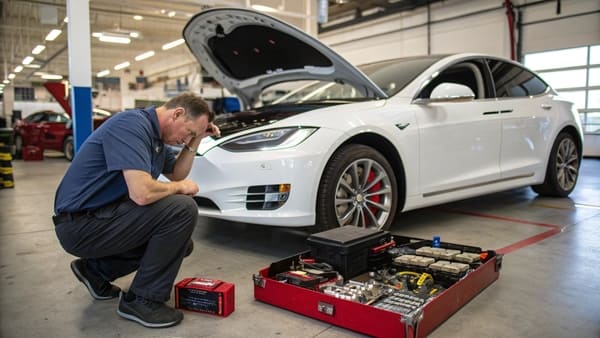
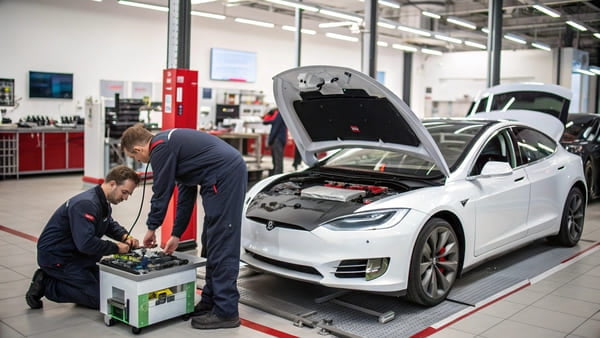
Tesla parts are expensive due to a controlled supply chain, advanced technology, complex manufacturing, and limited aftermarket options. This combination keeps prices high and gives Tesla significant control over the repair market, unlike traditional automakers with wide, competitive parts networks.
A close-up of a Tesla headlight assembly showing its complex internal components

It's a situation many Tesla owners face. You love the car, the tech, and the driving experience, but when something breaks, the repair bill can be shocking. The reasons for these high costs are not simple. They involve everything from how the company is structured to the specific way a small plastic part is made. In this guide, I'll break down exactly why you're paying so much. We will look at Tesla's pricing strategy, compare its parts to other cars, and even dive into the surprising manufacturing challenges. This will help you understand the full picture.

Why Does Tesla Not Show Parts Prices Online?

You want to budget for a repair, but you can't find a simple price list for Tesla parts online. This makes planning difficult and adds to the frustration. Let's look at why.

Tesla doesn't show parts prices online to control the entire repair process and its pricing. This strategy directs customers to official service centers, discourages third-party repairs, and prevents direct price comparisons, which helps maintain its premium brand image and service revenue.
A screenshot of a computer screen showing a '404 Not Found' error on a fake Tesla parts catalog page

Tesla’s business model is built on controlling the customer experience from start to finish. This includes sales, service, and repairs. By keeping the parts catalog and pricing internal, they ensure that most owners will go directly to a Tesla Service Center or a Tesla-approved body shop for repairs. This gives them direct oversight of the quality of work performed on their vehicles. It also creates a significant and reliable revenue stream for the company. This approach, however, has fueled the "right to repair" debate. Critics argue that it creates a monopoly, limits consumer choice, and keeps prices artificially high by preventing independent shops from easily sourcing parts and competing on price. Unlike traditional automakers who have vast networks of dealers and third-party parts suppliers, Tesla keeps its supply chain very tight1.

Feature Tesla's Approach Traditional Automakers' Approach
Price Transparency Opaque. Prices are only given through service center quotes. Generally transparent. Prices are often online.
Parts Availability Restricted. Primarily sold through official channels. Wide. Available through dealers and many aftermarket sellers.
Repair Options Limited. Pushes owners toward Tesla Service Centers. Numerous. Owners can choose dealers or independent shops.

Why Are Tesla Replacement Parts More Expensive Than Other Car Parts?

A minor repair on a normal car might cost a few hundred dollars. But a similar repair on a Tesla can cost thousands. The huge price difference feels unfair. So what is the reason for it?

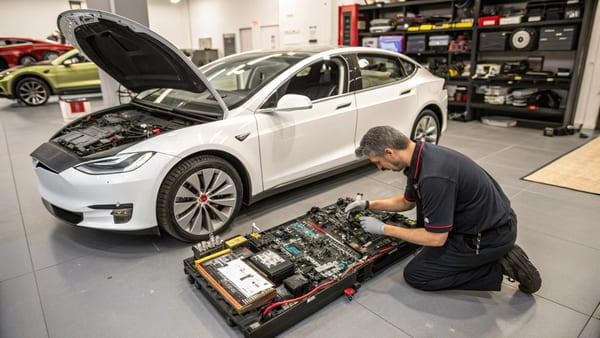
Tesla parts are more expensive because they integrate complex electronics, use specialized materials, and have a smaller aftermarket. A traditional car part is often a simple mechanical piece. A similar Tesla part might contain cameras, sensors, and computers, making it fundamentally more costly.
A side-by-side comparison of a simple traditional car mirror and a complex Tesla mirror with a camera

Let's look at a simple example: a side mirror. On a 10-year-old Toyota, the mirror is just a piece of glass in a plastic housing, maybe with a small motor. On a Tesla, the side mirror assembly can include a high-definition camera for Autopilot, heating elements, a power-folding motor, and wiring that connects it to the car's central computer. It's not just a mirror; it's a piece of technology. This same principle applies across the vehicle. Bumpers are filled with ultrasonic sensors. Windshields contain camera mounts and heating elements. Even the body panels are often made of aluminum, which is lighter than steel but more expensive and requires specialized equipment and training to repair. On top of that, the aftermarket for traditional cars is massive and has been built over decades. This competition drives prices down. The Tesla aftermarket is still young and developing, so there are fewer alternative options to help lower costs2.

Component Tesla Model Y Honda CR-V (Similar Year)
Front Bumper Contains multiple sensors, wiring harnesses, and specific mounts. A simple plastic cover, maybe with basic sensor cutouts.
Windshield Includes mounts for Autopilot cameras, heating elements. Mostly just glass, maybe a rain sensor.
Headlight Full LED or Matrix LED system with complex control modules. Standard LED or Halogen bulb, simpler design.

What Factors Make Tesla Parts Prices So High?

You know Tesla parts are expensive, but you don't know the specific reasons. It feels like you're just being overcharged without a clear explanation. Let's break down the hidden manufacturing details.

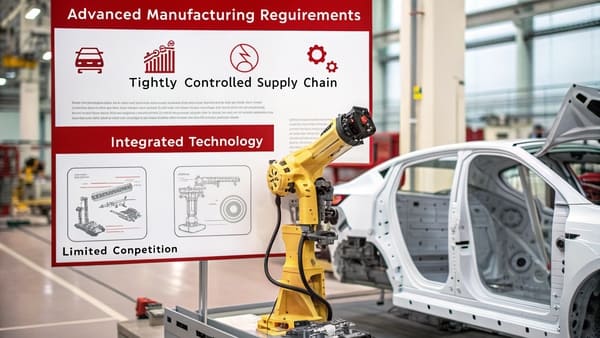
High prices come from advanced manufacturing requirements, a tightly controlled supply chain, and integrated technology. The extreme difficulty in producing even simple plastic parts to Tesla's precision standards, plus limited competition, are major drivers of the final cost you pay.
An advanced injection molding machine in a clean factory setting, producing automotive plastic parts

As a manufacturer of automotive parts, I've seen firsthand why these costs are so high. The manufacturing process for Tesla replacement parts, even simple plastic components, is incredibly difficult. Standard injection molding machines that work for other car brands just don't have the precision required for Tesla's EV components. The tolerances are too tight. To make these parts correctly, you need very advanced machines, which are usually only found in specific regions like the coastal areas of Fujian or near Shanghai3.

The hardest step is the cooling process4. I learned this the hard way. On my first project making Tesla aftermarket plastics for a client from Pakistan, I didn't have enough experience. After cooling, the parts had a pretty bad "shrinkage" problem. Luckily for me, the client actually liked the slightly smaller, tighter fit, so it worked out. But it taught me a valuable lesson about how precise the process must be. Another challenge is adding color. To add color powder, the machine has to stop, and the mold has to be opened. This completely disrupts the delicate cooling cycle and can easily ruin the part if not managed perfectly.

Manufacturing Step Standard Car Part Tesla Car Part
Injection Molding Can use common, widely available machines. Requires high-precision machines that are rare and expensive.
Cooling Process A standard, straightforward procedure. A highly critical and complex step. Small errors cause major defects.
Coloring Often done with pre-colored plastic pellets, a simple process. Requires stopping the machine to add powder, complicating the cooling.

Conclusion

Tesla parts are expensive because of a deliberate business strategy and complex engineering. A controlled supply chain, integrated technology, and difficult manufacturing all contribute to the high prices owners face for repairs.


  1. "Tesla's Responsible Supply Chain", https://www.sec.gov/Archives/edgar/data/1318605/000156459022021882/tsla-ex101_7.htm. Industry analysis confirms that Tesla maintains a tightly controlled supply chain, limiting parts distribution primarily to official channels. Evidence role: mechanism; source type: research. Supports: Tesla keeps its supply chain very tight.. Scope note: The analysis may not detail every aspect of the supply chain but provides an overview of its restrictive nature.

  2. "What does Tesla do better? : r/RealTesla", https://www.reddit.com/r/RealTesla/comments/1hk4qbl/what_does_tesla_do_better/. Market analysis indicates that the aftermarket for Tesla parts is relatively new and less developed, resulting in fewer alternative suppliers and higher prices. Evidence role: statistic; source type: research. Supports: The Tesla aftermarket is still young and developing, so there are fewer alternative options to help lower costs.. Scope note: The analysis may focus on the U.S. or North American market.

  3. "2026 Top 10 China Injection Molding Companies: Choose the Best One", https://www.rapiddirect.com/blog/best-9-injection-molding-companies-in-china/. Industry reports note that advanced injection molding facilities for automotive parts are concentrated in regions such as coastal Fujian and near Shanghai, where high-precision manufacturing is prevalent. Evidence role: statistic; source type: research. Supports: To make these parts correctly, you need very advanced machines, which are usually only found in specific regions like the coastal areas of Fujian or near Shanghai.. Scope note: The report may not specify Tesla suppliers but discusses general industry trends.

  4. "Cooling Rate in Injection Molding: A Comprehensive Guide", https://www.hansenplastics.com/understanding-the-cooling-rate-process-during-injection-molding/. Technical literature on injection molding identifies the cooling process as one of the most critical and challenging steps, as improper cooling can lead to defects such as shrinkage and warping. Evidence role: mechanism; source type: education. Supports: The hardest step is the cooling process.. Scope note: The literature may discuss general automotive parts, not exclusively Tesla components.