
A vibrating truck and a failing driveline mean your fleet is losing money. You want a quick, cheap fix, but will a simple repair hold up or cause more problems?
Deciding between truck driveline repair1 and replacement2 depends on the damage. Minor issues like worn U-joints3 are repairable. However, if the shaft is bent or cracked, or if precision balancing4 is needed, a full replacement2 is often safer and more cost-effective5 in the long run.
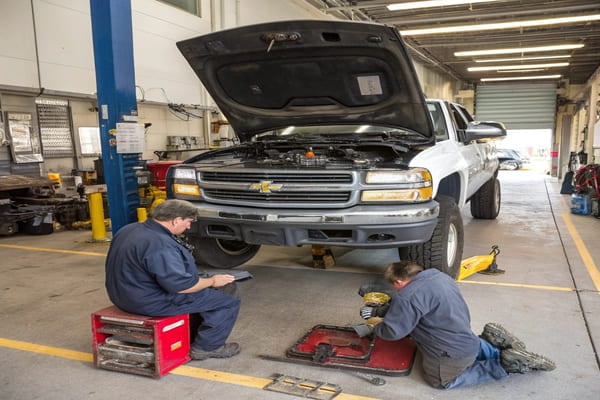
Making the right call can save you thousands in the long run. It's not just about the upfront cost; it's about downtime, reliability, and the hidden complexities6 of the repair process. Let's break down what "driveline repair" truly involves so you can see the full picture.
What Does “Truck Driveline Repair” Really Mean for Cost and Downtime?
Your truck is down, and you need it back on the road fast. "Repair" sounds quick, but the reality of driveline work can mean unexpected delays and repeat visits.
Truck driveline repair involves replacing components like U-joints3, center bearings7, or yokes. For a business, this means balancing the cost of parts and specialized labor8 against downtime. A simple U-joint swap is fast, but complex balancing or alignment can take days, impacting your operations significantly.
The Hidden Complexity of Driveline Repair
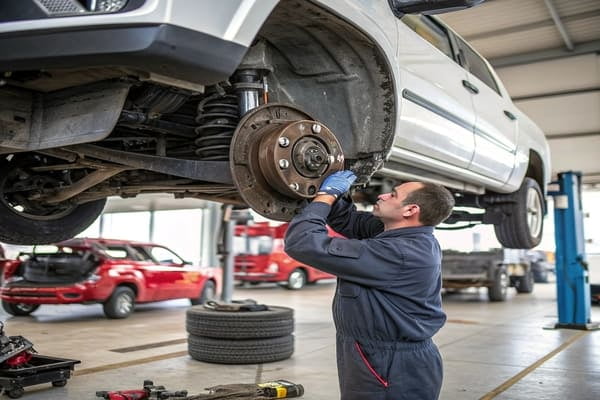
From my experience as a manufacturer, true driveline repair is far more complex than most people think. It's not just about swapping a part. The precision required is incredibly high, and standard workshop equipment often can't handle it, especially for heavy-duty trucks. The entire process involves at least three critical stages. The most challenging stage is the driveline clearance adjustment9. This requires specialized machinery that can perform micro-adjustments to ensure perfect alignment and balance. Honestly, you'll only find equipment with this level of accuracy in specific industrial hubs. In China, for example, the top-tier repair facilities are concentrated around areas like Liaocheng in Shandong and Wuxi in Jiangsu. Your average local workshop simply doesn't have the tools to meet these standards. An improper adjustment leads to vibrations, noise, and premature failure. I learned this the hard way on one of my first projects with a North American client. We repaired a driveline, but our calibration wasn't perfect. The result was a noticeable "driveline noise10" after installation. I was worried, but the client used the trucks for low-load transport and, strangely enough, they liked the sound! It was a lucky break, but it taught me a valuable lesson about the importance of precision. We haven't made that mistake since.
How Much Does Truck Driveline Repair Actually Cost in 2025?
Budgeting for fleet maintenance11 is tough when repair costs12 are a mystery. A low initial quote can quickly balloon, leaving you with an unexpected bill and a hole in your budget.
In 2025, a simple truck driveline repair1, like replacing a U-joint, can cost between $200 and $500. More complex jobs, such as balancing the entire shaft or replacing a center bearing, can range from $600 to over $1,500, depending on labor rates13 and parts.
A Detailed Look at Repair Expenses
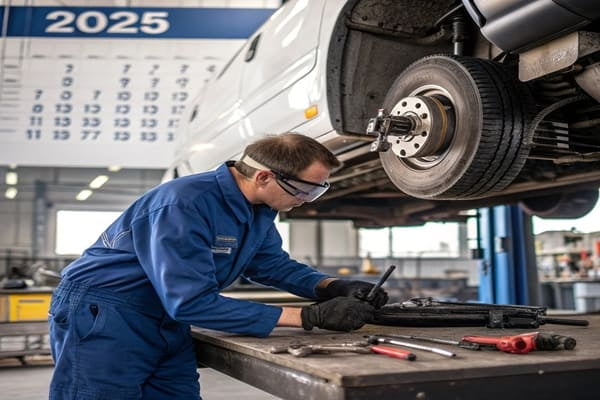
When we talk about repair costs12, it's important to break them down into parts and labor. The price of components can vary, but the real variable is the labor, especially when specialized work is needed. A simple U-joint is an inexpensive part, but the labor to press it in and out correctly adds up. If the repair requires re-balancing the entire driveshaft, you're now paying for time on a very expensive machine, and the hourly rate for a technician qualified to operate it is much higher. Many businesses I work with try to save money by going to a general mechanic, but this can be a false economy. An improperly balanced driveshaft will wear out other components, like transmission seals and differential bearings, leading to much more expensive repairs down the road.
Here’s a table to give you a clearer idea of what to expect for different types of driveline repairs:
| Repair Type | Estimated Parts Cost | Estimated Labor Cost | Total Estimated Cost |
|---|---|---|---|
| U-Joint Replacement (Single) | $50 - $100 | $150 - $400 | $200 - $500 |
| Center Bearing Replacement | $100 - $250 | $200 - $500 | $300 - $750 |
| Driveshaft Balancing | N/A | $150 - $300 | $150 - $300 |
| Full Rebuild (U-Joints, Bearing) | $200 - $400 | $400 - $800+ | $600 - $1,200+ |
These are just estimates. The final cost will depend heavily on your truck's make and model, as well as the labor rates13 in your area. As an OEM supplier14, we see how these costs influence the decision to repair versus buying a new, factory-guaranteed assembly.
When Is Repair Cheaper Than Full Drive Shaft Replacement?
Every dollar counts in this business. You're facing a driveline issue and want to make the smartest financial choice, but a cheap fix today could lead to bigger bills tomorrow.
Repair is cheaper than replacement2 when the damage is limited to replaceable components like U-joints3 or a center support bearing, and the driveshaft tube itself is straight and undamaged. If the repair cost is less than 50-60% of a new shaft, it's generally the more economical choice.
The 50% Rule for Driveline Decisions
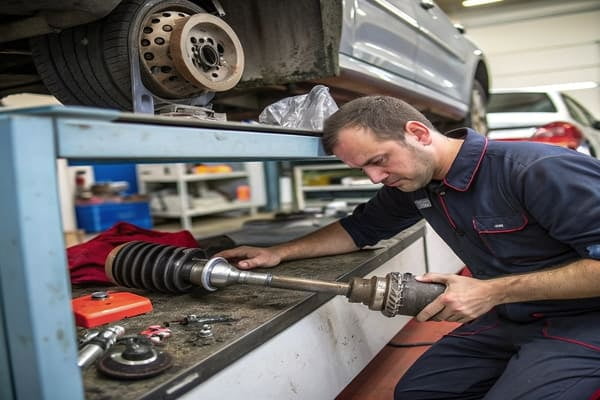
As a rule of thumb in the manufacturing and supply industry, I always advise my clients to use the "50% rule." If the total estimated cost of the repair—including parts, specialized labor8, and balancing—is more than half the cost of a brand-new, high-quality replacement2 driveshaft, you should lean towards replacement2. Why? Because a new shaft comes with a warranty and the guarantee of perfectly balanced, factory-spec components. A repaired shaft, even if done well, is still made of old and new parts. You might fix the U-joints3, but the shaft tube itself has already seen thousands of miles of stress.
Here's a simple checklist to help you decide:
Repair is a good option if:
- Only a single, external component has failed (e.g., one U-joint).
- The driveshaft tube is perfectly straight and has no dents or cracks.
- The total repair cost is well under 50% of a new replacement2.
- You have access to a trusted, specialized driveline shop.
Replacement is the better choice if:
- The driveshaft tube is bent, dented, or cracked.
- Multiple components have failed at once (e.g., both U-joints3 and the center bearing).
- The splines or yokes are worn or twisted.
- The repair quote is approaching the cost of a new shaft.
Ultimately, a replacement2 offers peace of mind and predictable long-term costs, which is often more valuable than a small upfront saving.
What Factors Drive Up the Cost of Truck Driveline Repair?
You thought it was a simple fix, but the repair bill is shocking. Unseen complexities and special requirements can turn a small job into a very expensive one without warning.
The cost of truck driveline repair1 increases due to several factors: the need for specialized balancing equipment, the type of material (e.g., aluminum vs. steel), the complexity of the shaft design (multi-piece shafts15), and the high cost of labor from technicians with specialized driveline expertise.
Unpacking the Hidden Costs
Several key factors can significantly inflate the cost of a driveline repair. It's not always as simple as swapping one part for another. As a supplier, I see how these details impact the final price for my clients. One of the biggest hidden challenges is ensuring a perfect seal during lubrication. I've seen this firsthand. When working on universal joints, the technician has to stop the equipment and open the dust cover to apply grease. This process, if not done with extreme care, can compromise the seal's integrity. A failed seal lets in dirt and moisture, leading to premature failure of the brand-new part you just paid for. This is a delicate operation that requires experience and the right environment, adding to the labor time and cost.
Here are the main cost drivers you need to be aware of:
| Cost Factor | Why It Increases the Price |
|---|---|
| Specialized Balancing | Requires expensive, high-precision machinery and a trained operator. General shops can't do this. |
| Shaft Material | Aluminum or composite driveshafts are lighter but require special handling and welding techniques compared to steel. |
| Multi-Piece Shafts | More components to deal with (center bearings7, extra U-joints3), meaning more labor and complexity. |
| Labor Expertise | A driveline specialist charges more per hour than a general mechanic due to their specific skill set. |
| Component Sealing | As mentioned, properly lubricating and re-sealing U-joints3 is a critical, time-consuming step that adds cost. |
These factors are why a seemingly straightforward repair can quickly become a complex and costly job.
Conclusion
Ultimately, a driveline repair is for minor issues. For major damage or to ensure long-term reliability for your fleet, a full replacement2 is the smarter, safer investment.
Understanding the intricacies of truck driveline repair can help you make informed decisions about maintenance and costs. ↩
Explore the scenarios where replacement is more beneficial than repair for your fleet. ↩
Learn about U-joints to understand their role in driveline systems and the impact of their failure. ↩
Understanding precision balancing can help ensure your driveline operates smoothly and efficiently. ↩
Explore cost-effective strategies to maintain your truck's driveline and avoid expensive repairs. ↩
Uncover the complexities that can lead to unexpected repair costs and delays. ↩
Explore the function of center bearings to grasp their importance in maintaining driveline integrity. ↩
Understanding the role of specialized labor can help you appreciate the costs involved in repairs. ↩
Discover the significance of driveline clearance adjustment for optimal vehicle performance. ↩
Understanding driveline noise can help diagnose issues early and prevent costly repairs. ↩
Learn best practices for fleet maintenance to minimize downtime and repair costs. ↩
Get insights into the various factors that can affect the cost of driveline repairs. ↩
Understanding labor rates can help you budget more accurately for driveline repairs. ↩
Discover how OEM suppliers influence the quality and cost of driveline components. ↩
Learn about multi-piece shafts to understand their impact on repair complexity and costs. ↩