
Are your front brake pads worn out, but the rears look okay? You might be tempted to save money by only changing the front ones. But this simple choice has complex safety implications.
Yes, you can replace only the front brake pads, but it is not generally recommended. Doing so can create a braking imbalance1 between the front and rear axles, potentially affecting vehicle stability and safety, unless a professional recalibration of the brake force distribution2 is performed.

This question comes up a lot in my line of work. As a manufacturer of automotive parts, I talk to distributors and brands all the time. They want to offer solutions that are both cost-effective and safe for their customers. The idea of replacing just one axle's worth of pads sounds good on paper. It saves money and materials. But the reality of vehicle dynamics3 makes it a tricky procedure. Let's dive into the details to understand why this is a job that requires more than just a simple swap.
Can I replace just the front brake pads?
Your front brakes are squealing, and a mechanic confirms they need replacing. The rear pads, however, still have life left. Is it safe to just address the front and leave the back for later?
Yes, replacing only the front brake pads is technically possible, but it must be done carefully. For the vehicle to remain safe, the braking system needs to be re-balanced to account for the new, more aggressive front pads working with older rear pads.
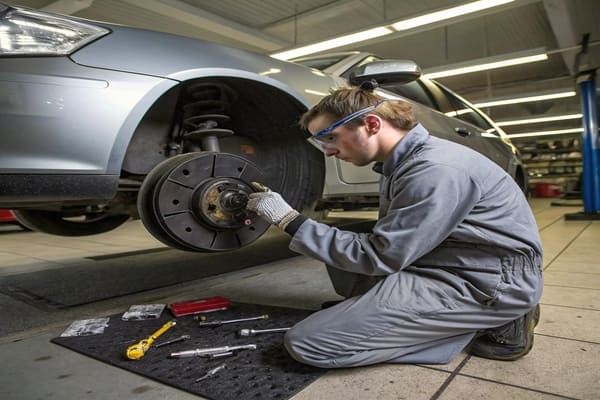
When we develop brake components4, we think about the entire system. The front and rear brakes are designed to work together. The front brakes typically handle about 60-70% of the stopping force. This is because when you brake, the car's weight shifts forward. If you install brand-new, highly effective pads on the front and leave worn pads on the rear, this balance is disrupted. The front brakes will bite much harder than the rears. This can cause the front of the car to "dive" excessively during braking. In a sudden stop, it could even lead to a loss of stability.
To do this job correctly, a technician needs to perform a front-to-rear brake force distribution2 calibration. This is a highly precise task. It requires special equipment and knowledge that many standard repair shops simply do not have. In my experience, you usually only find this level of service at specialized brake tuning centers5. Without this calibration, you are compromising the vehicle's designed safety features6.
Is it okay to only replace rear brake pads?
Maybe your situation is the opposite. A checkup reveals your rear pads are worn to the limit, but the front pads are still in good shape. Is it fine to just replace the rears?
Yes, it is generally safer to replace only the rear brake pads compared to only the fronts. Because the rear brakes handle less of the overall stopping force, an imbalance is less likely to cause severe handling issues.
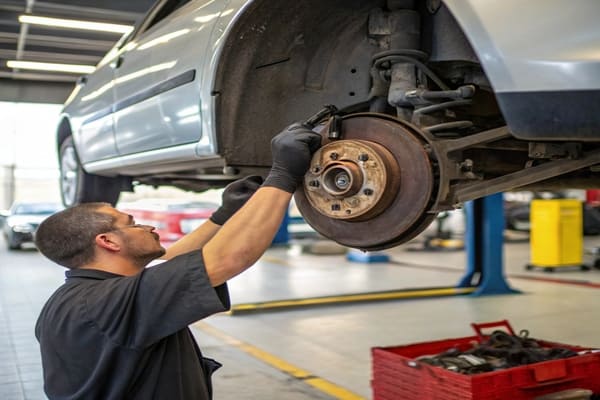
This scenario is a bit different. Since the front brakes do most of the heavy lifting, having new pads at the rear and partially worn pads at the front creates a much smaller performance gap. The car's braking balance will not be as dramatically affected. For this reason, many technicians are more comfortable performing a rear-only brake pad replacement7. However, this does not mean it's a simple decision that requires no thought.
The biggest challenge here is proper assessment. To decide if a rear-only replacement is okay, a technician must accurately judge the remaining life and condition of the front pads. This is harder than it sounds. It often involves stopping the repair work, pulling up the vehicle's service records, and using a gauge to measure pad thickness. This adds time and complexity. A visual check is not always enough. If the front pads are closer to replacement than they appear, you will just be back in the shop in a few months, paying for labor all over again.
Is it better to replace front or back brakes?
If you have a tight budget and can only afford to service one axle, you face a tough choice. Which one should you prioritize? Is it better to replace the front or the back brakes first?
You should always replace the brake pads that are the most worn. However, if both have some wear, the front brakes are more critical for raw stopping power8, while the rear brakes are essential for stability during braking.
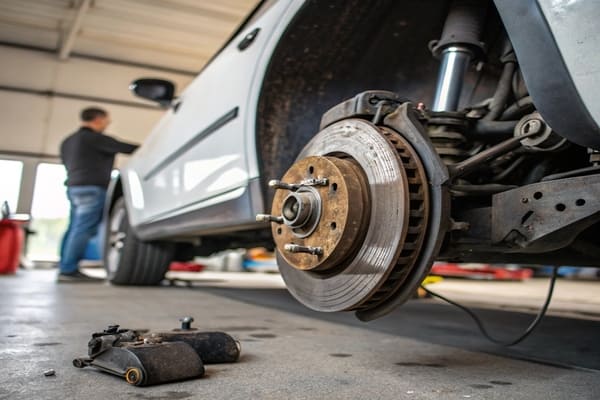
This question doesn't have a simple "always choose front" or "always choose back" answer. The right choice depends entirely on a thorough inspection. Both axles play a critical, but different, role in bringing your vehicle to a safe stop. It's a matter of teamwork. The front brakes are the strongmen, and the rear brakes provide the essential support to keep everything stable and controlled.
To make it clearer, let's break down their jobs.
| Brake Axle | Primary Role | Consequence of Failure |
|---|---|---|
| Front Brakes | Provide the majority (60-70%) of stopping power8. | Drastically increased stopping distance. |
| Rear Brakes | Provide stability and prevent the car from spinning. | Increased risk of skidding or losing control. |
As you can see, neglecting either one is a bad idea. The decision on which to replace first must be based on which set is more worn out. A professional mechanic can measure the pad thickness and tell you which axle needs immediate attention. Choosing based on anything other than the actual condition of the pads is a guess, and you should never guess when it comes to your safety.
Can you replace just two brake pads?
Let's take the cost-saving idea to its extreme. What if only the left front brake pad is worn? Can you just replace the two pads on that single wheel and call it a day?
No, you should never replace just two brake pads on one side of an axle. Brake pads must always be replaced as a complete set for that axle, meaning both the left and right wheels, to ensure even braking.
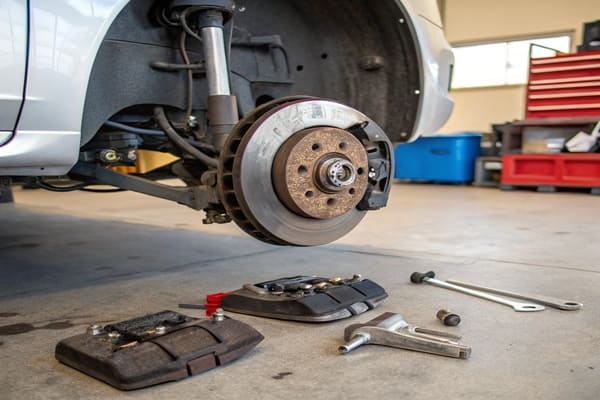
This is one rule that has no exceptions. Replacing pads on only one wheel is extremely dangerous. I learned this lesson the hard way early in my career. We were working on a custom project for a client from Pakistan. We experimented with replacing the pads on just one side. The result was a phenomenon called "brake pull9." When the driver hit the brakes, the car would violently jerk to the side with the new, stronger pad.
To my surprise, my client, who was a performance driving enthusiast, actually liked the aggressive, unstable feeling. But for any normal driver, it is a critical safety failure. That experience taught me a vital lesson: brakes must be balanced. A new pad has maximum grip, while a worn pad has very little. This difference in force across the axle will make the car unpredictable and difficult to control, especially in an emergency. No professional or reputable parts supplier would ever recommend this. Always replace brake pads in axle pairs10.
Conclusion
While replacing only front pads is technically possible with expert calibration, it's complex. For safety, always replace pads in axle pairs10. Replacing all four at once ensures optimal balance and performance.
Understanding braking imbalance is crucial for ensuring your vehicle's safety and stability during braking. ↩
Learn about brake force distribution calibration to understand its importance in maintaining vehicle safety. ↩
Explore vehicle dynamics to grasp how they influence braking and overall vehicle control. ↩
Discover the essential components of a braking system to better understand how they work together. ↩
Find out what specialized brake tuning centers provide to ensure your vehicle's braking system is optimized. ↩
Explore the safety features of braking systems to understand how they protect drivers and passengers. ↩
Learn the best practices for brake pad replacement to ensure safety and performance. ↩
Understanding stopping power is essential for safe driving; explore the factors that influence it. ↩
Learn about brake pull to prevent dangerous driving situations and ensure vehicle safety. ↩
Discover why replacing brake pads in axle pairs is critical for maintaining balanced braking. ↩