
Sourcing brake rotors? The Bosch name seems like a safe bet, but relying on the brand alone can lead to quality issues and sourcing confusion for your business.
While Bosch rotors1 are known for quality, they aren't always the "best" choice. The best option depends on whether you need OEM2 or aftermarket parts3. Understanding who actually manufactures them is key to making a smart purchase for your business.
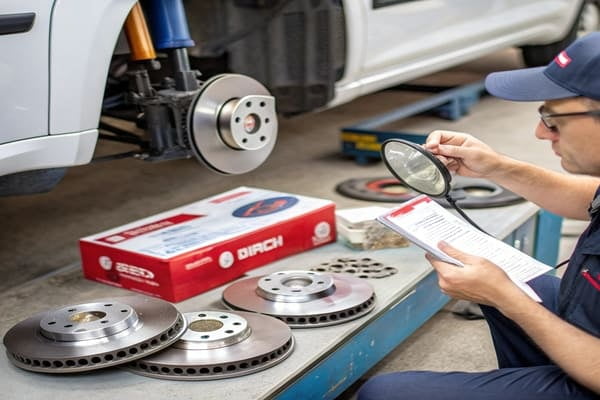
The Bosch brand is a giant in the auto parts world. Everyone knows the name. But when you're a professional buyer, you need to look past the label on the box. You need to know what you're actually buying. As a manufacturer, I've learned that the story behind the part is just as important as the name on it. Let's dig into the details to see if Bosch is the right fit for your import or wholesale business.
Is Bosch a Manufacturer or Just a Brand Owner?
You see the Bosch logo and assume they made the part. But in the auto industry, things are complex. Is your supplier a true manufacturer or just another brand?
Bosch is both a manufacturer and a brand owner. They produce many components in-house but also partner with other specialized factories (OEM2s) to manufacture parts under their brand. This is a common and effective strategy in the global auto parts supply chain.
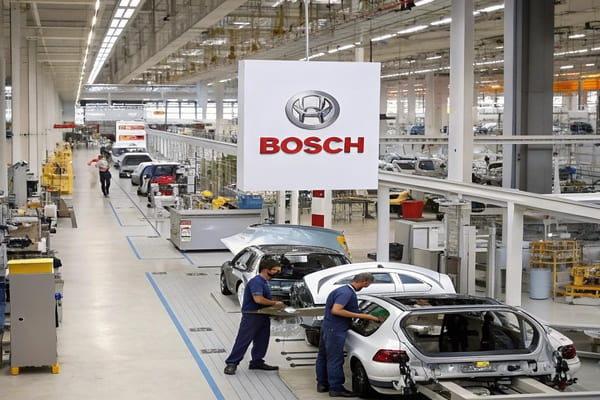
For a global company like Bosch, it's all about efficiency and expertise. It's not practical for one company to be the absolute best at making every single car part. That’s why they use a dual strategy. As a factory owner, I see this model all the time. Large brands come to us because we have specialized equipment and deep experience in a specific product line, like automotive lighting or brake components4. Bosch does the same. They have their own massive factories for core technologies like fuel injection systems. But for other parts, they partner with expert manufacturers5 who can meet their strict quality standards6. This allows them to offer a complete catalog of parts without building a new factory for every item. This partnership between a brand and a manufacturer is a win-win that keeps the global auto parts market moving.
Comparing Bosch's Production Models
| Aspect | In-House Manufacturing | Sourcing from OEM2 Partners |
|---|---|---|
| Control | Bosch has 100% control over R&D and production. | Bosch sets the quality standards6 and specs. |
| Expertise | Focuses on Bosch's core technological strengths. | Leverages the specialized expertise of the partner. |
| Product Range | Limited to what they can produce internally. | Allows for a much wider and diverse product catalog. |
| Example | Advanced electronics, fuel injectors. | Certain brake rotors, filters, wiper blades. |
Where Are Bosch Disc Brake Rotors Actually Made?
You need to know the origin of your products for quality control. But "Made for Bosch" can mean anywhere. How do you ensure consistent quality and trace the source?
Many high-quality Bosch-style brake rotors are manufactured in China, particularly in specialized industrial zones. Factories in the Yangtze River Delta and the Liaocheng area in Shandong are well-known for having the advanced technology required for producing these precise components.
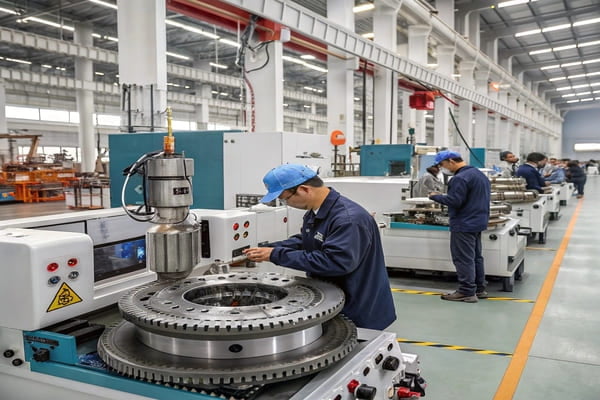
Making a brake rotor that meets Bosch's standards is not simple. It's a high-tech process that small workshops just can't handle. The casting process alone involves at least three critical stages, and the most difficult one is controlling the carbon content7 during high-temperature smelting. The machines needed for this level of precision are expensive and complex. You typically find them in established industrial regions with a history of high-end manufacturing, like the Yangtze River Delta and around Liaocheng in Shandong province. Another major challenge is the laser drilling8 for the ventilation holes9. The machine has to stop its rotation, open the fixture to drill, and then close it again. This process makes it very difficult to maintain perfect flatness10 across the rotor's surface. Even a tiny deviation can cause braking vibration. This is why, as a global buyer, you must work with a factory that has proven experience with these specific technical challenges.
Key Manufacturing Challenges
| Challenge | Impact on Rotor Quality | Why It's Difficult |
|---|---|---|
| High-Temp Carbon Control | Determines hardness, heat dissipation, and crack resistance. | Requires highly specialized and precise smelting equipment. |
| Laser Drilling of Vents | Affects cooling efficiency and structural integrity. | Risk of compromising the rotor's surface flatness10. |
| Maintaining Flatness | Prevents brake vibration and ensures smooth stopping. | The entire process, from casting to drilling, must be perfect. |
Are Bosch Disc Brake Rotors OEM2 or Aftermarket Products?
Your customers demand specific quality levels. Are you buying genuine OEM2 parts or high-quality aftermarket equivalents? The difference impacts price, performance, and your reputation.
Bosch supplies both OEM2 (Original Equipment Manufacturer) parts directly to car makers and a wide range of aftermarket parts3 to distributors and repair shops. The quality is high for both, but the specifications and branding might differ slightly to meet different market needs.
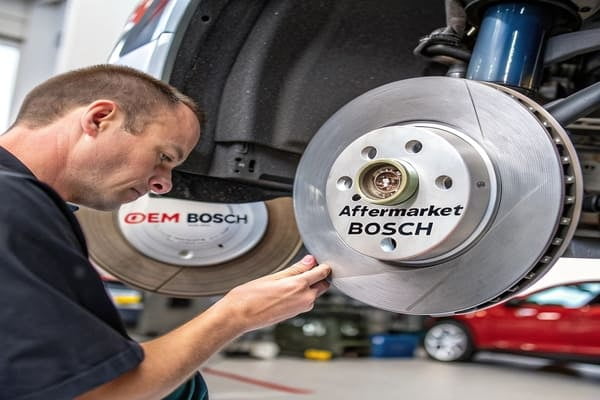
The terms OEM2 and aftermarket can be confusing. OEM2 parts are what the car manufacturer installs at the factory. Aftermarket parts are replacements you buy later. Bosch plays in both fields. But here’s something important I've learned from my own factory floor: a good aftermarket part can be just as good, or even better, than the OEM2 version. It all comes down to the manufacturer.
I remember an early project with a European client. We were making high-performance rotors11 based on a Bosch design. After production, I noticed some rotors had fine "surface thermal cracking." I was worried. I called the client immediately and showed them. To my surprise, they were thrilled. Their customers were racers who saw these marks as proof of a high-carbon rotor that could handle extreme heat. We fixed the "issue" for future standard orders, but it was a great lesson. It showed that the "best" part depends on the customer. As your manufacturing partner12, my job is to understand your specific market and produce a part that meets your customers' exact needs.
Conclusion
Bosch is a strong brand, but the best choice is a reliable manufacturing partner12 who understands your specific needs, whether for OEM2-equivalent or custom aftermarket parts3.
Explore the benefits of Bosch rotors to understand their quality and performance in the automotive industry. ↩
Learn about OEM parts and their significance in ensuring quality and compatibility for vehicles. ↩
Discover the pros and cons of aftermarket parts compared to OEM to make informed purchasing decisions. ↩
Explore the various brake components to gain insights into their functions and importance. ↩
Find out about leading manufacturers to compare quality and options for brake rotors. ↩
Understand the quality standards that ensure reliability and safety in automotive components. ↩
Explore the role of carbon content in brake rotors to understand its impact on performance and durability. ↩
Learn about laser drilling technology and its significance in producing high-quality brake rotors. ↩
Understand the importance of ventilation holes in brake rotors for cooling and performance. ↩
Discover why maintaining flatness is crucial for brake rotor performance and safety. ↩
Explore the features of high-performance rotors to see if they meet your specific needs. ↩
Learn how to choose the right manufacturing partner to ensure quality and reliability in your parts. ↩