
Are you struggling to select brake components1? Choosing the wrong materials can risk your safety and lead to costly repairs. This guide will help you make the right choice.
The best way to choose brake materials is to match them to your vehicle's weight, your driving style, and each other. For most drivers, ceramic pads2 with standard cast iron rotors3 offer a great balance of performance, noise, and cleanliness.
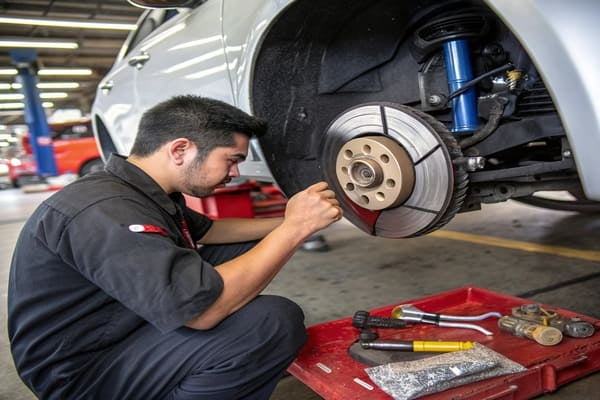
Choosing the right materials for your brake system is more than just picking parts from a catalog. It's a science that directly impacts how your vehicle stops, feels, and performs. A mismatch can lead to noise, excessive dust, or even dangerous brake fade4. To get it right, you need to understand what goes into both the pads and the rotors. Let's break down how to select the right materials for both components, step by step, so you can source parts with confidence.
How to choose brake pad material5?
Confused by all the different brake pad options available? Choosing the wrong one can result in annoying squeals, dirty wheels, or poor stopping power when you need it most.
To choose the right brake pad, match the material to your driving needs. Organic pads are quiet for daily driving, semi-metallic pads6 offer great stopping power for heavy use, and ceramic pads2 provide a clean, quiet, all-around performance.
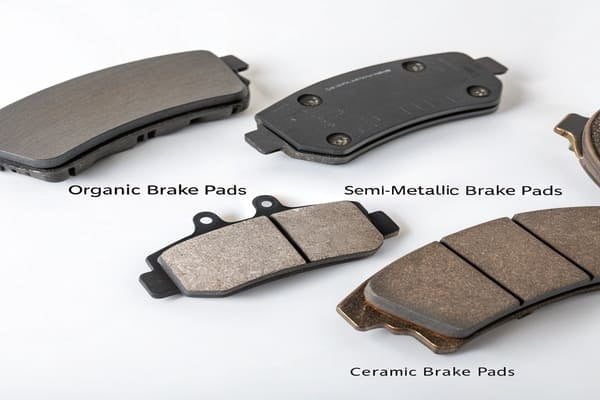
Choosing the right brake pad material5 is critical, as this is where the friction that stops your car is generated. The three main types you will encounter are organic, semi-metallic, and ceramic. Each has a distinct set of characteristics tailored for different applications. The real challenge, which we face every day in manufacturing, is balancing the material's friction coefficient with its heat fade characteristics. Getting this wrong results in a brake pad that might work well when cold but fails dangerously under heavy use. This is why high-precision manufacturing7 is so important.
Here’s a simple breakdown to help you decide:
| Pad Material | Performance | Noise | Dust | Best For |
|---|---|---|---|---|
| Organic (NAO) | Moderate | Very Low | Low | Daily commuting, light vehicles |
| Semi-Metallic | High | Moderate-High | High | Heavy vehicles, towing, spirited driving |
| Ceramic | High & Consistent | Very Low | Very Low | All-around use, luxury & performance cars |
What material is best for brake rotors8?
Brake rotors might all look the same, but the material makes a huge difference. A poor rotor choice can cause vibrations, rapid wear, or even cracking under pressure.
For the vast majority of cars and trucks, high-quality gray cast iron is the best material for brake rotors8. It offers an excellent balance of heat dissipation, durability, and cost-effectiveness for everyday driving and heavy-duty use.
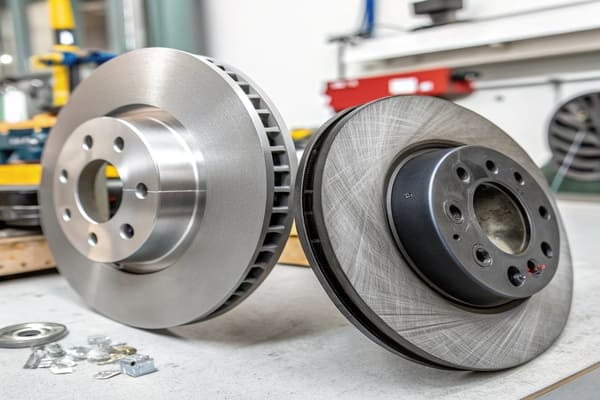
The brake rotor's job is to absorb and dissipate the immense heat generated by friction. For this reason, material choice is everything. The industry standard is gray cast iron because it handles heat well and is very durable for its cost. However, not all cast iron is created equal. The quality of the casting and the specific alloy determines its resistance to warping and cracking.
For high-performance supercars, you’ll see exotic materials like carbon-ceramic. These rotors are incredibly lightweight and can withstand extreme temperatures without any brake fade4, but their cost is prohibitive for regular vehicles. For most OEM and aftermarket applications, we focus on perfecting the cast iron formula and design. This includes options like:
- Blank/Smooth Rotors: The standard for most cars. They provide a quiet, consistent feel.
- Drilled/Slotted Rotors: These designs help vent gases and water for better performance in wet or high-performance conditions, but they can sometimes increase pad wear.
The key is to match the rotor to the pad. An aggressive semi-metallic pad can quickly wear down a basic, low-quality rotor.
What is the 30 30 30 rule for brakes?
Do your new brakes feel weak or make noise? This often happens when they are not broken in correctly, which can lead to glazing, vibration, and reduced stopping power.
The "30-30-30 rule9" is a simple method for bedding in new brakes. It involves performing 30 moderate slow-downs from 30 mph, with 30 seconds of cooling time between each slow-down to properly mate the pad and rotor surfaces.
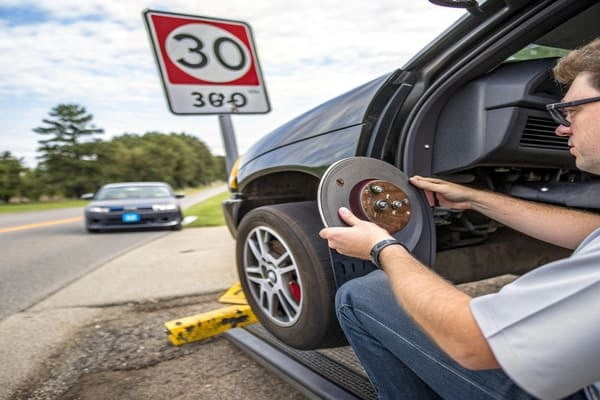
"Bedding-in" is one of the most important and overlooked steps after installing new brake pads and rotors. The goal is to transfer a thin, even layer of friction material from the new pads onto the face of the rotors. This creates a perfect contact surface, ensuring quiet operation, maximum stopping power, and a long service life. The 30-30-30 rule9 is a popular and effective way to do this.
Here is how you do it safely:
- Find a safe area with no traffic.
- Accelerate to around 30 mph (about 50 km/h).
- Apply firm, steady pressure to the brakes to slow down to about 5-10 mph. Do not come to a complete stop.
- Drive for about 30 seconds to allow the brakes to cool.
- Repeat this cycle 30 times.
- After the last cycle, drive for several minutes without using the brakes much to let them cool down completely.
This controlled heating and cooling process cures the resin in the brake pads and ensures the friction layer is applied evenly. Skipping this can lead to brake judder10 and noise down the road.
What to look for when buying brake pads and rotors?
Feeling overwhelmed by the options when buying brakes? A bad purchase wastes money, time, and puts you back in the workshop for another repair job sooner than you'd like.
When buying brake pads and rotors, focus on three things: material compatibility11 between the pad and rotor, your specific vehicle and driving style, and the manufacturer's quality. Always source from a reliable supplier12 who understands material science.
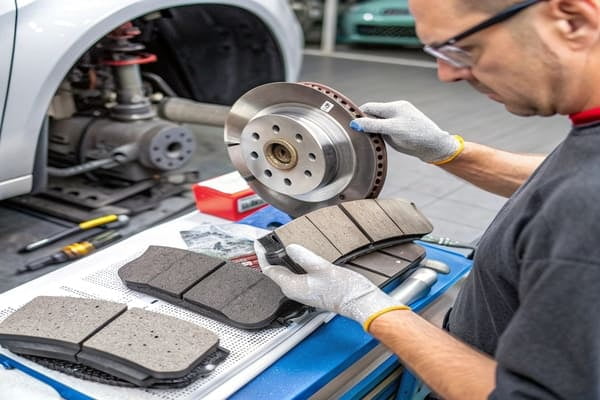
Sourcing the right brake components1 requires looking beyond the price tag. The most difficult part of our job as a manufacturer is getting the material formulation just right. It's a precise science. For example, we must constantly adjust formulas based on a vehicle's weight and intended use. During development, we have to run tests, stop, pull the vehicle dynamics data13, and then fine-tune the material mix. It's a complex process that demands expertise.
I remember my first project developing a custom brake solution for a client in Pakistan. We were still learning, and the final product showed some signs of uneven wear after installation. I was worried, but the client actually loved the feel and performance! It taught me two things: customer needs can be unique, and getting the material science right from the start is the only way to guarantee predictable, reliable results. High-precision factories, like our partners near Shanghai, have the technology to balance friction and heat fade perfectly. Lower-precision operations often can't achieve this, leading to inconsistent and unreliable brake performance.
Conclusion
Choosing the right brake materials means matching pads and rotors to your vehicle and driving needs. Partnering with a knowledgeable manufacturer is key to ensuring safety, performance, and long-term reliability.
Explore this link to understand the critical aspects of selecting brake components for optimal safety. ↩
Learn why ceramic pads are favored for their performance and cleanliness in various driving conditions. ↩
Discover the advantages of cast iron rotors in terms of durability and heat dissipation. ↩
Understanding brake fade is crucial for maintaining vehicle safety; this link provides valuable insights. ↩
This resource will guide you through selecting the best brake pad material for your vehicle. ↩
Explore the performance characteristics of semi-metallic pads for heavy-duty applications. ↩
Discover how high-precision manufacturing impacts brake performance and reliability. ↩
Get expert advice on selecting the right brake rotors for your vehicle's needs. ↩
This method is essential for new brakes; find out how to implement it effectively. ↩
Learn about brake judder issues and effective solutions to ensure smooth braking. ↩
Explore the significance of matching brake pad and rotor materials for safety and performance. ↩
This resource will help you identify trustworthy suppliers for quality brake components. ↩
Understanding vehicle dynamics data is key to optimizing brake performance; explore this link. ↩