
Hearing a clicking sound when you turn? Worried it's a CV joint and will cost a fortune? Understanding the real costs can put you in control of the repair bill1.
In 2025, a constant velocity (CV) joint replacement typically costs between $250 and $850 per joint. A full CV axle replacement2 is more common and ranges from $300 to $1,200. The final price depends heavily on your vehicle, the parts used, and local labor rates3.
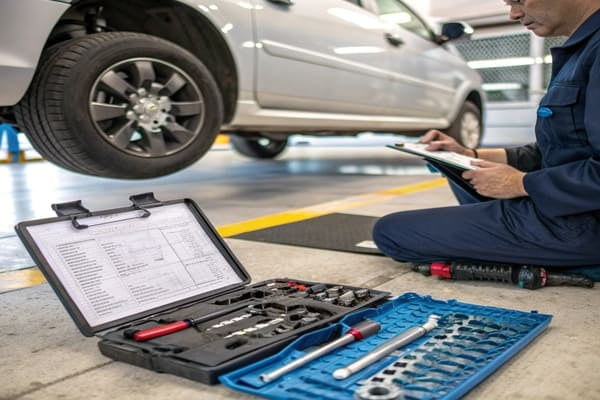
That price range is pretty wide, isn't it? The cost isn't just about a single part; it's a mix of components, labor, and the specific problem with your car. To really understand the price you're quoted, you need to know what a CV joint is and what the replacement process4 actually involves. Let's break it down so you can have a much clearer conversation with your mechanic and make sure you're getting a fair deal.
What Is a Constant Velocity Joint and Why Does It Affect Replacement Cost?
You hear "CV joint" from your mechanic, but what is it? This confusion can lead to you overpaying for a repair you don't fully understand. Let's clear that up.
A constant velocity (CV) joint is a critical part of your car's drivetrain. It connects the transmission to the wheels and allows the drive shaft to transmit power through a variable angle, at a constant rotational speed. This is what lets your wheels turn and move up and down with the suspension.
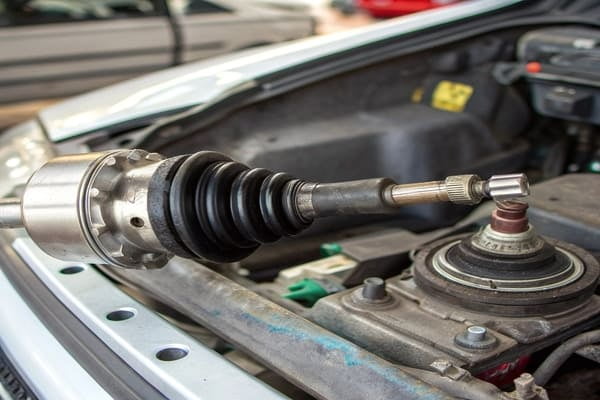
The design of a CV joint is what makes it both effective and costly to replace. Inside a protective rubber or plastic boot, you'll find a very precise assembly of bearings and grooves, all packed in special grease. This complexity is why the replacement process4 is so sensitive.
Why Do CV Joints Fail?
The number one cause of failure isn't the joint itself, but the rubber boot5 that protects it.
- The Boot Tears: Over time, the flexible CV boot can become brittle and crack or get torn by road debris.
- Grease Escapes: Once the boot is compromised, the centrifugal force from the spinning axle slings the grease out.
- Contaminants Get In: With the grease gone, dirt, water, and grit work their way into the joint.
- The Joint Wears Out: These contaminants6 act like sandpaper, quickly wearing down the precision-machined metal components inside. This wear is what causes the classic "clicking" or "popping" noise when you turn.
From our experience as a manufacturer, the quality of the joint and the boot material are everything. A well-made joint from a reliable supplier uses high-grade steel7 and durable boot materials designed to withstand extreme temperatures and flexing. This is why a quality replacement part costs more—it’s engineered for longevity.
How Much Does It Cost to Replace a CV Joint Versus a Complete Axle?
Your mechanic says you need a new CV axle, but you thought it was just the joint. Are they trying to upsell you? Knowing the difference helps you make the right call.
Replacing just the single CV joint is cheaper for the part itself but involves much more labor. A complete CV axle assembly costs more for the part but is far quicker to install, often making the total bill very similar or even cheaper in some cases.
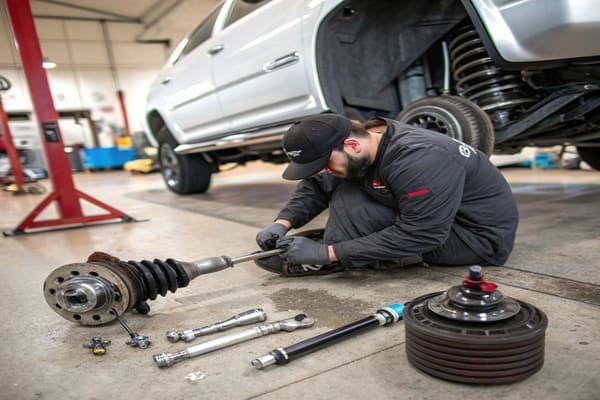
For most modern repair shops, replacing the entire CV axle has become the standard procedure. The reason comes down to labor, reliability, and managing risk. Rebuilding a joint on the car is a messy, time-consuming job that carries a higher risk of improper assembly. A brand-new axle assembly is a sealed, factory-built unit that a mechanic can swap in relatively quickly. I've seen shops spend hours trying to get a new joint seated correctly, only to have it fail a few months later because the boot seal wasn't perfect.
Let's compare the two repair options8 directly.
| Factor | Replacing CV Joint Only | Replacing Complete CV Axle |
|---|---|---|
| Part Cost | Lower ($50 - $150) | Higher ($100 - $500+) |
| Labor Time | Higher (2 - 4 hours) | Lower (1 - 2 hours) |
| Total Estimated Cost | $250 - $600 | $300 - $1,200 |
| Reliability | Depends heavily on mechanic's skill9 | High (factory assembled10 & sealed) |
| Warranty | Often shorter or parts-only | Typically longer on parts & labor |
As you can see, while you might save on the part, the extra labor for a joint-only replacement can quickly close the price gap. For our B2B clients—distributors and wholesalers—we always recommend they stock complete axle assemblies. It provides a better, more reliable solution for their customers, the repair shops, and reduces the chance of warranty claims11.
What Factors Have the Biggest Impact on CV Joint Replacement Cost?
You received a quote for a CV joint repair that seems much higher than your friend's. Are you being overcharged? Let's look at what really moves the needle on the final price.
The three biggest factors that determine your final bill are your vehicle's make and model, the type of replacement parts used (OEM vs. aftermarket), and the specific labor rates3 in your area. These variables can easily change the cost by hundreds of dollars.
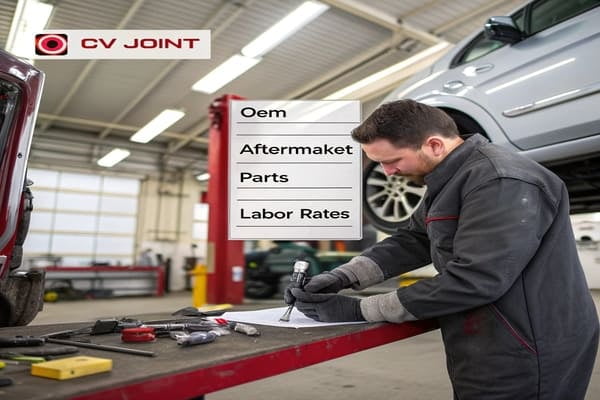
It's easy to think a repair is just a repair, but the details matter immensely. As an OEM and ODM supplier, we see the cost differences from the very beginning of the manufacturing process. A part for a high-performance luxury car requires different materials, tighter tolerances, and more complex engineering than a part for a standard economy car.
1. Vehicle Make and Model
This is often the single largest variable.
- Economy Cars (e.g., Honda Civic, Toyota Corolla): Parts are mass-produced and widely available, keeping costs down. The job is straightforward.
- Luxury or Performance Cars (e.g., BMW, Audi, Mercedes-Benz): These vehicles use more complex axle designs and higher-grade materials. The parts are more expensive, and the labor is often more intensive due to surrounding components.
- Trucks and SUVs: Larger, heavier-duty parts naturally cost more. Some 4x4 systems also add complexity to the replacement job.
2. OEM vs. Aftermarket Parts
- OEM (Original Equipment Manufacturer): These are the exact same parts your car was built with, sold through the dealer network. They offer guaranteed compatibility but at the highest price.
- Aftermarket: These parts are made by companies like us. As a supplier, our goal is to produce parts that meet or exceed OEM specifications at a more competitive price. A high-quality aftermarket axle from a reputable brand is a great way to save money without sacrificing reliability.
3. Shop Labor Rates
- Dealerships: They have the highest labor rates3 but also have factory-trained technicians and specialized tools for your specific vehicle.
- Independent Repair Shops: Their rates are generally lower, but quality can vary. A good independent shop is often the best value.
- Location: Labor rates in major cities are almost always higher than in rural areas.
How Does Labor Cost Change for Inner vs Outer CV Joint Replacement?
The mechanic quoted one price for an outer joint and a different one for an inner joint. Why would one cost more? The answer is all about the labor involved.
Replacing an outer CV joint is usually a faster and cheaper job. The inner CV joint is more difficult to access, often requiring more disassembly and therefore more labor time, which increases the total cost of the repair.
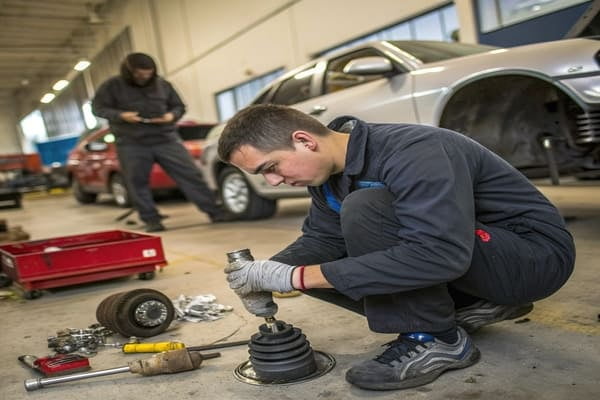
From a technical standpoint, the two jobs are quite different. The outer joint lives at the wheel hub, while the inner joint connects the axle to the transmission or differential. This positioning is key.
The Outer CV Joint Job
The outer joint is the one that does the most work when you turn the steering wheel. To replace it, a mechanic typically needs to remove the wheel, brake caliper, and hub nut, then pop the joint out of the steering knuckle. It's relatively accessible.
The Inner CV Joint Job
The inner joint is tucked up against the transmission. Replacing it often means the entire CV axle must be removed from the car. This can involve draining transmission fluid and carefully prying the axle out of the transaxle housing, which adds steps, time, and potential complications.
This is where professional equipment and experience really matter. I remember one of our first projects for a North American client, where we supplied individual replacement joints. We were still refining our processes and had a few cases of "dust boot failure" after installation. The boot clamps weren't sealed with enough precision. Luckily, the client was very understanding, as the vehicles were used for short-range duties, and the experience gave us priceless data. It forced us to perfect our tooling for the boot sealing process. That early lesson taught me that the reliability of a CV joint repair comes down to controlling every tiny step, especially achieving a perfect seal. This is why many shops avoid the risk and just install a complete, factory-sealed axle.
Conclusion
CV joint replacement12 costs are complex, but knowing what drives the price—parts, labor, and your specific car—empowers you to make a smart decision and avoid overpaying for repairs.
---Get tips on managing repair costs effectively to avoid unexpected expenses. ↩
Get insights into the costs associated with CV axle replacements to plan your expenses. ↩
Knowing labor rates can help you choose the right repair shop and avoid overcharging. ↩
Understanding the replacement process can help you communicate effectively with your mechanic. ↩
Discover the importance of the rubber boot in protecting your CV joint from damage. ↩
Understanding how contaminants impact CV joints can help you maintain your vehicle better. ↩
Understand the significance of material quality in ensuring the longevity of CV joints. ↩
Explore various repair options to find the best solution for your vehicle's needs. ↩
Learn how the expertise of your mechanic can impact the quality and cost of repairs. ↩
Discover the benefits of factory assembled parts for reliability and performance. ↩
Learn about warranty claims to protect your investment in vehicle repairs. ↩
Understanding the average cost can help you budget for repairs and avoid overpaying. ↩