
Struggling to source affordable Tesla parts? The high costs and long waits from the manufacturer can be frustrating. What if a reliable alternative already exists, just waiting to be unlocked?
Tesla salvage parts1 are components harvested from vehicles deemed total losses2 by insurance companies. They enter the market through specialized dismantlers3 and auctions. For many applications, especially custom builds4 or repairs, they offer a cost-effective and viable alternative to new OEM parts if processed correctly.
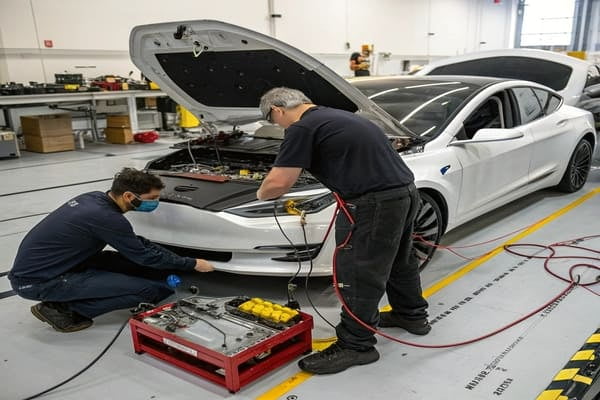
But how does a high-tech electric car go from a total wreck to a source of valuable, reusable components? The journey is far more complex and technical than most people imagine. It involves insurance assessors5, auction houses6, and highly specialized engineers with unique equipment. Understanding this process is key to knowing if these parts are right for your needs. Let's break down the entire lifecycle, step by step.
Where Do Tesla Salvage Parts Come From?
Ever wonder about the origin of used Tesla parts? They seem to just appear on the market. The source is actually a very structured, though often unseen, industry process.
Tesla salvage parts1 primarily originate from vehicles that have been in accidents, floods, or other major incidents. This damage causes an insurance company to declare the car a "total loss." While the vehicle is no longer road-worthy, it still contains many perfectly functional and valuable components.
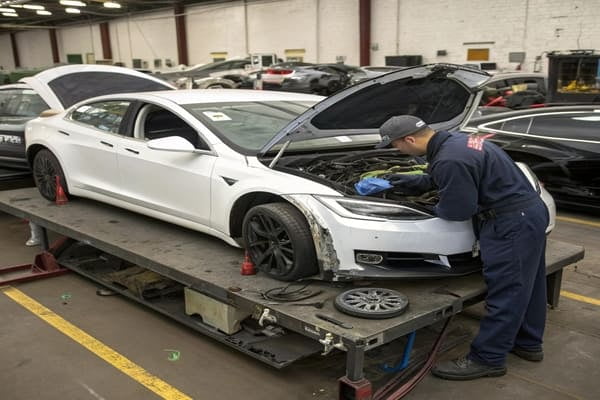
The term "salvage" might bring to mind a pile of useless junk, but in the modern auto industry, it's a critical source of components. A car is often declared a total loss not because every part is destroyed, but because the cost to repair the vehicle to its original, pre-accident condition is too high for the insurance company to justify. For example, a collision might damage the chassis and deploy airbags, a very expensive fix. However, the electric motor, the main infotainment screen, the battery cells, and the suspension components might be completely untouched and in perfect working order. These undamaged parts are the treasure that professional dismantlers are after. They represent a huge opportunity to keep functional, high-tech components in circulation, providing a much-needed supply for repair shops7, custom builders, and international markets.
How Do Insurance Write-Offs Lead to Salvageable Tesla Components?
An insurance "write-off" sounds like the final word on a car's life. But for its parts, it is just the beginning. How does this financial decision create a physical supply chain?
When the cost to repair a damaged Tesla exceeds a certain percentage of its market value8, the insurer declares it a "write-off." They pay the owner and take possession of the vehicle. Then, they sell the car to a salvage yard or auction house to recover some of their loss.
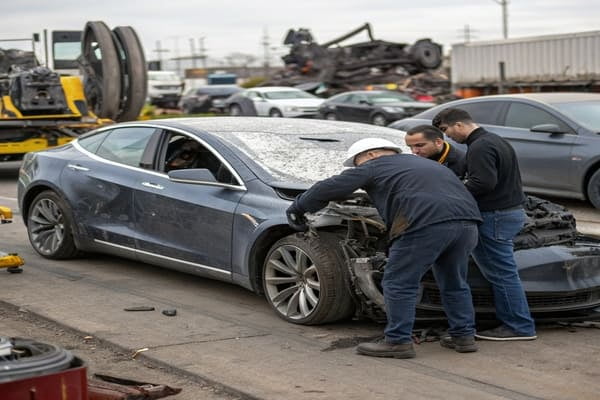
This entire process is based on simple economics. Insurance companies have a threshold, often around 70-80% of the car's pre-accident value. If the repair estimate, including parts and labor, goes over this limit, it's cheaper for them to just pay the owner the car's full value and sell the wreck. This is where the salvage market begins. The car is given a "salvage title," and it's sold to the highest bidder. These bidders are not regular consumers; they are licensed dismantlers and rebuilders who know exactly what they are looking for. They might see a Tesla with severe front-end damage but know that the rear drive unit and the entire battery pack are pristine. For them, buying the whole car is worth it just to get those few high-value assemblies. This turns an insurance liability into a valuable asset for the secondary parts market.
What Happens at Salvage Auctions Before Parts Are Sold?
Salvage auctions can seem like a mysterious part of the auto world. What really goes on there? It's not just a junkyard; it's a critical marketplace where value is assessed and reborn.
At salvage auctions9, wrecked Teslas are inspected and categorized based on their damage. Professional buyers, mostly dismantlers and rebuilders, bid on these cars. They are buying the potential of the parts inside, not the vehicle as a whole. This is the key transaction before dismantling begins.
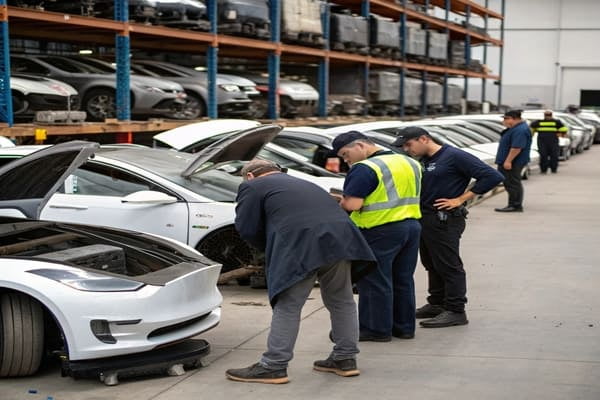
These auctions are sophisticated operations. Each vehicle is photographed extensively, and a basic damage report is provided. Buyers can often inspect the cars in person or through detailed online listings. An experienced buyer can look at a listing and quickly estimate the value of the salvageable components. They know which parts are in high demand and which models have interchangeable components.
The Bidding Process
The bidding is competitive. Buyers are calculating their potential profit based on a few key factors:
| Factor | Description | Importance |
|---|---|---|
| Key Components | Is the battery, drive unit, or MCU screen intact? | High |
| Model & Year | Is it a high-demand model like a Model 3 or Y? | High |
| Mileage | Lower mileage often means less wear on mechanical parts. | Medium |
| Type of Damage | Flood damage is riskier than collision damage. | High |
This is a business of expertise. The winning bidder is the one who can most accurately predict the value of the harvested parts and has the lowest cost to dismantle and process them.
How Are Tesla Vehicles Dismantled to Harvest Usable Parts?
Taking apart a normal car is one thing. Dismantling a modern Tesla is a different game entirely. The complexity, the integrated electronics, and the high-voltage systems10 demand a level of precision that separates true professionals from amateurs.
Teslas are dismantled using specialized equipment in a multi-step process. It involves safely de-energizing the high-voltage system, carefully removing battery modules, and precisely separating the high-strength steel11 body. This requires accuracy that standard workshop tools simply cannot provide.
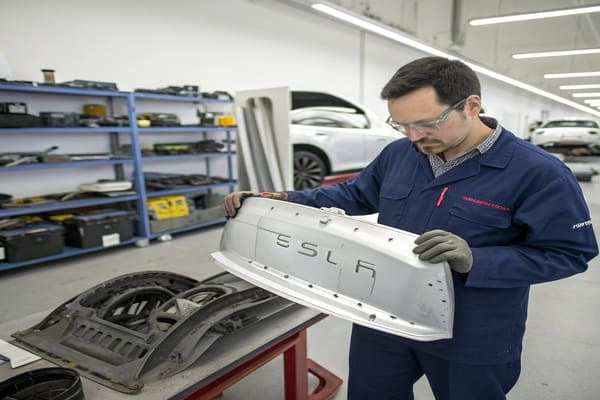
From my own experience as a manufacturer, I can tell you that the difficulty here is extremely high. The process is not just about unbolting parts; it's about surgical extraction.
The High-Strength Steel Challenge
One of the biggest hurdles is dealing with the vehicle's body. Tesla uses high-strength steel11 and aluminum castings to create a rigid safety cell. You cannot just cut this apart with a simple torch or saw. Doing so would damage the very components you are trying to save. To do it right, you need high-precision cutting equipment that can follow exact lines without creating stress or heat damage. In China, the factories with this level of equipment are concentrated in specific industrial hubs, like the Yangtze River Delta and the area around Guangzhou. A small, local workshop simply won't have the machinery to meet the required precision.
Core Component Testing: The Real Bottleneck
The second major difficulty is testing the core components after they are removed. How do you verify that a battery module or a drive unit is fully functional? This requires connecting it to diagnostic equipment12. For the battery, this often means we have to open the sealed module to access the test points. The very act of testing can introduce risks and potentially affect the long-term stability of the module if not done perfectly.
I learned this the hard way on one of my first projects involving Tesla salvage parts1. We were working with a client from Pakistan who was building a custom replica car. After we dismantled the vehicle and tested the components, we found there was a slight "adaptation deviation." The parts worked, but not exactly to the original factory specifications. I was worried, but it turned out to be a lucky break. For his custom build, this slight deviation actually made the parts easier to integrate into his non-Tesla chassis. We've refined our process since then, but it was a valuable lesson in the complexities of giving these parts a second life.
Conclusion
Tesla salvage parts1 offer great value, but their journey from wreck to market is complex. Sourcing from a professional with the right equipment and testing procedures is essential for reliability.
Explore the benefits of Tesla salvage parts for cost-effective repairs and custom builds. ↩
Understanding total loss can help you navigate insurance claims and salvage opportunities. ↩
Discover the expertise of specialized dismantlers in the salvage industry. ↩
Discover how custom builds can leverage salvage parts for unique projects. ↩
Learn how insurance assessors impact the salvage process and vehicle valuation. ↩
Learn about the function of auction houses in facilitating salvage vehicle sales. ↩
Find out how repair shops benefit from using salvage parts for cost-effective solutions. ↩
Learn how market value affects salvage decisions and insurance claims. ↩
Gain insights into the auction process and how to bid effectively on salvage vehicles. ↩
Understand the importance of high-voltage systems in electric vehicles like Tesla. ↩
Explore the benefits of high-strength steel in vehicle safety and performance. ↩
Discover the tools used to ensure the functionality of salvaged electric vehicle components. ↩