
Struggling to find a brake pad supplier1 you can trust? Poor quality leads to recalls and lost profits. Focus on their production strength2 and catalog depth to secure your business.
To choose the right manufacturer, you must verify their production strength2, especially in friction layer molding3 and anti-corrosion coating4. Also, check that they have a complete catalog5 covering diverse vehicle models. This combination proves their technical expertise6 and market understanding, reducing your sourcing risks.
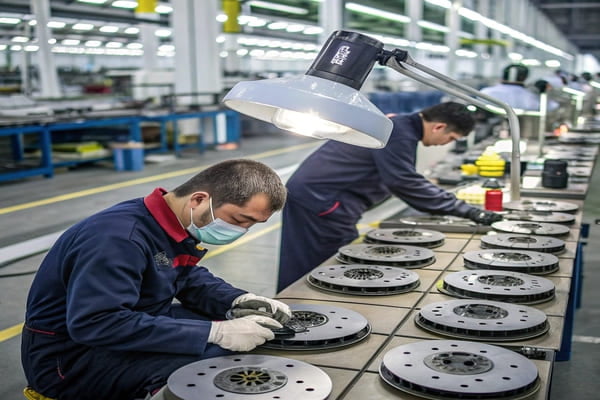
Finding a reliable partner for something as critical as brake pads is not just about price. It's about safety, reliability, and building a long-term business. I've learned that a supplier's true value is shown in their factory capabilities and the breadth of their product offerings. These two areas tell you almost everything you need to know about their ability to deliver consistent, high-quality products. Let's explore what you should look for to make the right choice and avoid costly mistakes.
What Core Capabilities Should a Reliable Brake Pad Manufacturer Demonstrate?
All suppliers claim to be experts. But how do you know who truly has the technical skills to produce safe parts? Look for specific evidence of their manufacturing process control.
A reliable manufacturer must demonstrate mastery over critical processes like friction layer molding3 and steel backplate coating. They should also have advanced quality control systems7 and material engineering expertise8 to ensure consistent performance and durability for every batch of brake pads they produce.
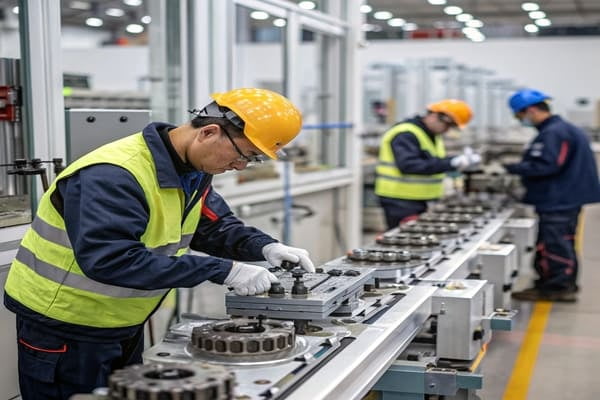
I've been in this industry for a long time, and I can tell you that making a good brake pad is extremely difficult. It requires a level of precision that many factories simply don't have. The real test of a manufacturer lies in their ability to handle the most challenging steps of the production process. If they can't show you how they master these, you should be cautious.
Precision in Molding
The most difficult step in making brake pads is the friction layer molding3 and curing. This is done with a hot-press machine. However, not all machines are the same. To achieve the required density and bonding strength, you need a machine with very high precision. In my experience, the best machines for this job are often found in the Yangtze River Delta and around the Chongqing area. Machines from smaller workshops, particularly in some other regions, often lack the precision needed, which can lead to inconsistent quality and potential safety issues.
Consistency in Coating
Another major challenge is the anti-corrosion coating4 on the steel backplate. This process requires the production line to stop for spraying. During this stop, the fixture holding the part has to be opened. This makes it very difficult to apply a perfectly uniform coat of paint. An experienced manufacturer will have developed specific techniques and equipment modifications to overcome this. They can ensure every single steel backplate is properly protected against rust, which is critical for the brake pad's lifespan and performance.
| Core Capability | Why It's Critical | What to Look For |
|---|---|---|
| Friction Layer Molding | Determines the pad's density, wear rate, and performance. | High-precision hot-press machines, strict temperature and pressure controls. |
| Steel Backplate Coating | Prevents rust and ensures the pad stays securely in place. | Evidence of a uniform coating process, salt spray test results9. |
| Material Science | The formula of the friction material defines its characteristics. | In-house lab, ability to develop custom formulas (ceramic, semi-metallic). |
| Quality Control | Catches defects before they reach the customer. | IATF 16949 certification10, end-of-line performance testing equipment. |
How Does a Full Brake Parts Catalog Help Buyers Make Faster Decisions?
Sourcing parts for many different vehicles is time-consuming. You waste hours contacting multiple suppliers for different models. A single supplier with a full catalog simplifies everything.
A comprehensive brake parts catalog allows you to consolidate your purchasing. Instead of vetting multiple suppliers for different models, you can source everything from one trusted partner. This saves time, streamlines logistics, and often leads to better volume pricing and a stronger relationship.
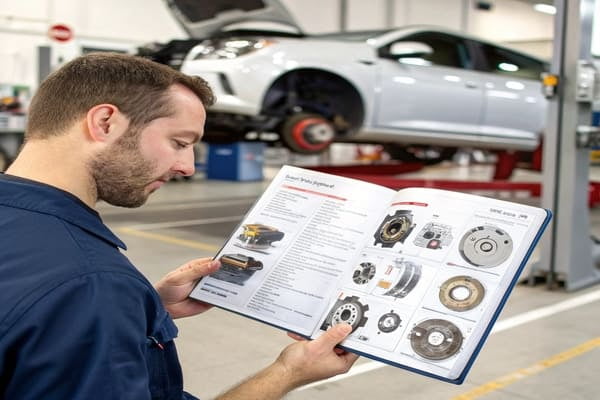
For buyers like distributors and importers, time is money. The process of finding, vetting, and managing multiple suppliers for different product lines is a huge drain on resources. A manufacturer with a complete catalog5 fundamentally changes this dynamic. When you find one partner who can cover 80% or even 90% of your needs, your entire operation becomes more efficient. You are no longer just buying a product; you are building a strategic partnership. This consolidation allows you to focus on selling and growing your market, not on endless sourcing tasks.
Streamlining the Sourcing Process
Imagine you need brake pads for Japanese, European, and American vehicles. Sourcing from three different specialized suppliers means three separate communication channels, three quality control processes, three purchase orders, and three shipments to manage. The administrative workload is huge. With a single, full-catalog supplier, this is reduced to one. You have one point of contact who understands your entire business, one quality standard to trust, and one consolidated shipment. This simplification reduces administrative costs, lowers the risk of errors, and makes your supply chain much easier to manage.
A Sign of Market Expertise
A complete catalog5 is more than just a long product list. It's proof that the manufacturer has invested heavily in research and development. It shows they understand the specific requirements of different car brands and markets. A supplier who has molds and formulas for a wide range of vehicles has likely been in the business for a long time and has a deep understanding of global automotive standards. This built-in expertise is invaluable, as they can often provide insights into market trends and help you identify new opportunities for your business.
| Sourcing Method | Time & Effort | Logistics Complexity | Relationship |
|---|---|---|---|
| Multiple Suppliers | High (vetting, communication) | High (multiple shipments) | Transactional |
| Single Full-Catalog Supplier | Low (one point of contact) | Low (consolidated shipments) | Strategic Partnership |
Why Does Product Coverage Matter When Comparing Brake Pad Suppliers?
Your current supplier only offers a limited range of products. This forces you to miss out on market opportunities. Partner with a supplier who offers broad product coverage11.
Broad product coverage11 indicates a manufacturer's ability to handle diverse materials, specifications, and market demands. It shows they have the engineering depth and supply chain flexibility12 to support your business growth, whether you're entering new markets or expanding your current product line.
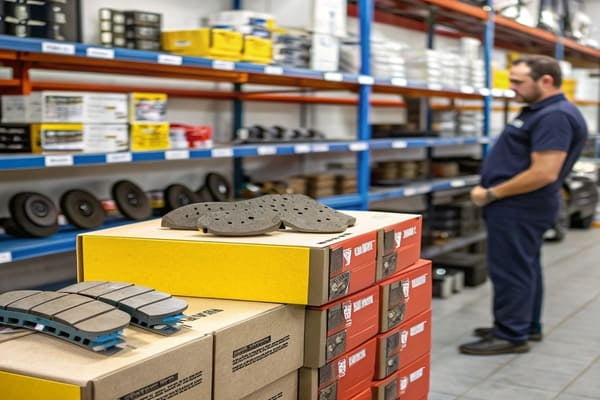
When I talk about product coverage11, I'm not just talking about the number of vehicle models a supplier can make parts for. I'm talking about the depth of their offering. A truly capable manufacturer doesn't just offer one type of brake pad. They provide solutions. They can help you build a complete product line that targets different customers within your market. This flexibility is what separates a simple parts producer from a true OEM/ODM partner13 who can help you grow your brand.
Beyond Vehicle Models
Good product coverage11 means the supplier can offer a variety of options. This includes different friction materials like ceramic, semi-metallic, and non-asbestos organic (NAO). Each material has different performance characteristics and price points. It also includes different product tiers, such as standard OE-replacement pads, premium pads with better noise and dust performance, and high-performance pads for enthusiasts. A supplier with this kind of range allows you to create a "good, better, best" strategy for your own brand, capturing a wider share of the market.
Building a Tiered Product Strategy
Let's say you want to launch your own private-label brand of brake pads. A supplier with deep product coverage11 can be your one-stop shop. They can help you develop an entry-level line of reliable semi-metallic pads to compete on price. At the same time, they can help you create a premium line of ceramic pads with advanced shims and hardware for customers who want quiet, clean performance. They can even help you develop a performance line for racing or heavy-duty applications. This ability to support a multi-tiered product strategy14 from a single factory is a huge competitive advantage.
| Product Tier | Target Customer | Key Features | Supplier Capability Needed |
|---|---|---|---|
| Economy/Standard | Price-conscious drivers | Reliable stopping, OE-equivalent | High-volume semi-metallic production |
| Premium | Everyday drivers seeking comfort | Low noise, low dust, long life | Advanced ceramic formulas, shim tech |
| Performance | Enthusiasts, heavy-duty use | High-temperature fade resistance | Custom formulas, advanced testing |
What Manufacturing Standards Should You Expect From a Professional Brake Pad Factory?
You are unsure what quality standards to demand from a supplier. Low standards lead to product failures and serious liability. You must insist on verified certifications and strict process controls.
Expect a professional factory to hold certifications like IATF 16949 and follow strict quality control at every stage. This includes raw material inspection15, in-process checks like monitoring molding pressure and temperature, and final product testing for friction performance, durability, and safety.
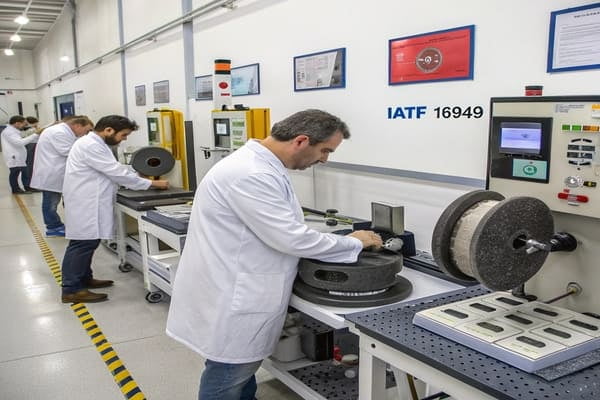
I learned a very important lesson about manufacturing standards early on. I was working with an Australian client on our first big brake pad order. We were confident in our process, but we were still gaining experience. After production, we discovered that some of the brake pads had a "lack of interlayer bonding strength." This meant the friction material wasn't perfectly bonded to the steel backplate after the curing process16. It was a serious problem.
Learning from Mistakes
We were honest with the client about the issue. To our surprise, he decided to test the pads anyway. He found that by adjusting the installation preload, the pads performed even better than he expected. He was happy with the result, and we were incredibly lucky. But that experience taught me a valuable lesson: "good enough" is never acceptable when it comes to safety parts. We immediately went back and re-engineered our curing process16, adding more quality checkpoints to ensure perfect bonding strength every single time. We have not made that mistake again.
Key Production Stages and Standards
This experience shaped how we view manufacturing. A professional factory must have unbreakable standards at every step.
- Friction Material Mixing: The raw materials must be precisely weighed and mixed according to the formula. Any deviation can change the pad's performance.
- Hot Press Molding and Curing: This is where my early mistake happened. We now use advanced machines that monitor pressure, temperature, and curing time in real-time to guarantee perfect bonding.
- Finishing and Coating: After curing, pads are ground to the exact thickness and coated. We now have a specialized process to ensure the anti-corrosion coating4 is perfectly uniform, even in the difficult-to-reach areas.
- Final Quality Testing: Every batch should be tested for friction coefficient17, wear rate, and shear strength18. This is not optional. It is the final guarantee that the product is safe and will perform as expected.
Conclusion
Choosing the right partner comes down to verifying their production strength2, catalog depth, and commitment to standards. This ensures you get high-quality products and a reliable supply chain.
Explore this link to find trusted brake pad suppliers that prioritize quality and reliability. ↩
Learn how to evaluate a manufacturer's production strength to ensure quality and safety in your products. ↩
Discover the importance of friction layer molding in producing high-quality brake pads. ↩
Understand how anti-corrosion coating enhances the durability and performance of brake pads. ↩
Find out how a complete catalog can streamline your sourcing process and save you time. ↩
Explore the key factors that demonstrate a manufacturer's technical expertise in brake pad production. ↩
Learn about the best practices in quality control systems that ensure product safety and reliability. ↩
Discover how material engineering expertise contributes to the performance and safety of brake pads. ↩
Understand the significance of salt spray tests in evaluating the corrosion resistance of brake pads. ↩
Learn about the importance of IATF 16949 certification for ensuring quality in manufacturing processes. ↩
Discover how broad product coverage can enhance your business opportunities and market reach. ↩
Find out how to enhance supply chain flexibility to support your business growth. ↩
Explore the benefits of partnering with an OEM/ODM for comprehensive brake pad solutions. ↩
Learn how to create a multi-tiered product strategy to capture a wider market share. ↩
Understand the critical role of raw material inspection in ensuring product quality and safety. ↩
Explore the curing process and its importance in achieving high-quality brake pads. ↩
Learn about the friction coefficient and its impact on brake pad performance. ↩
Discover the significance of shear strength in ensuring the safety and reliability of brake pads. ↩