
Tired of squeaky brakes and wheels covered in black dust? This constant cleaning and noise can be frustrating. Upgrading your brake pads might be the simple solution you need.
Yes, for most daily drivers, ceramic brake pads are better. They offer a superior combination of quiet operation, very low brake dust, and stable performance across a wide range of temperatures, while also being gentle on the brake rotors, which can extend their lifespan.
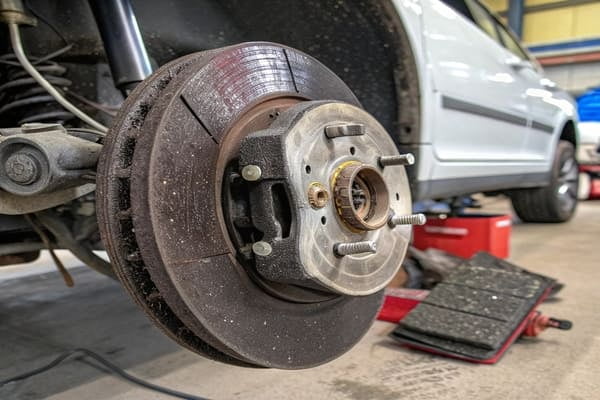
Choosing the right brake pad isn't just a simple decision. It feels like every option has its own set of pros and cons, and the technical jargon can be confusing. You want to make the best choice for your vehicle and driving style without overspending. Let's break down the details so you can understand if ceramic pads are the right fit for you and your customers. This guide will help you see the complete picture, from performance to cost.
What is a disadvantage of ceramic brake pads?
Thinking ceramic pads are the perfect solution for every car? This assumption can lead to poor performance in certain situations. It's important to know their limits before you invest.
The main disadvantage of ceramic brake pads is their lower heat conductivity compared to metallic pads. This means they don't dissipate heat as quickly, which can lead to increased temperatures in the brake system during aggressive, repetitive braking, like on a racetrack or when towing heavy loads.
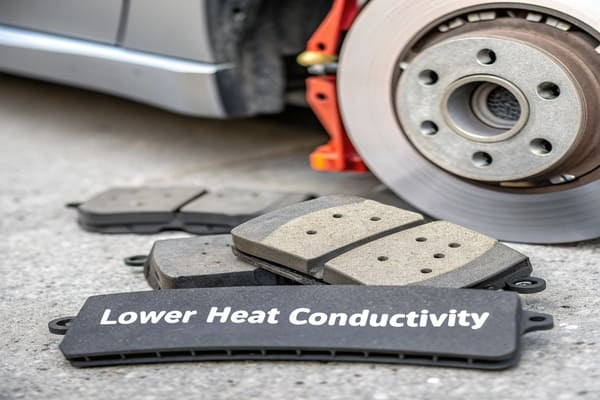
When we talk about brake pads, performance is about more than just stopping power. It's about how the entire system works together. The choice of materials directly impacts this balance. Ceramic pads are fantastic for daily driving, but their material composition has specific thermal properties that you need to understand.
Heat Management in Braking Systems
Heat is the biggest enemy of a braking system. When you press the brake pedal, the pads create friction against the rotor, converting kinetic energy into thermal energy (heat). This heat needs to go somewhere. Metallic pads are great at absorbing and dissipating this heat quickly. Ceramic pads, on the other hand, tend to insulate more, meaning the heat stays in the rotor and caliper for longer. For a normal commute, this is not an issue. But for a truck hauling a heavy trailer down a long hill, that extra heat can lead to brake fade, where the brakes become less effective.
The Cost Factor
| Another point to consider is the initial cost. The manufacturing process for ceramic brake pads is more complex and expensive. | Feature | Ceramic Pads | Metallic Pads |
|---|---|---|---|
| Heat Dissipation | Good | Excellent | |
| Ideal Use Case | Daily Driving, Commuting | Heavy Duty, Performance | |
| Initial Cost | Higher | Lower | |
| Rotor Wear | Very Low | Higher |
This higher production cost naturally translates to a higher price tag for the end user. While they often last longer and are kinder to rotors, the upfront investment is a key disadvantage for budget-conscious buyers.
Which brake pads are better, ceramic or metallic?
You're at a crossroads, trying to pick between ceramic and semi-metallic pads. Making the wrong choice can mean dealing with constant noise or disappointing stopping power for your customers. Let's compare them directly.
Neither is universally "better"; it depends on the application. Ceramic pads are better for drivers who prioritize a quiet, clean ride for daily commuting. Metallic pads are better for those who need high-performance stopping power, especially in extreme conditions, and don't mind more noise and dust.
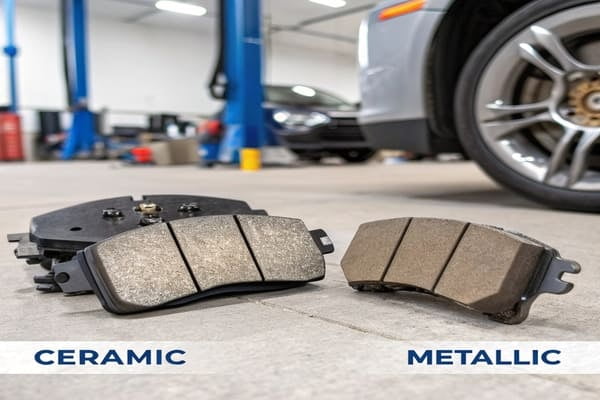
The debate between ceramic and metallic pads comes down to a trade-off between comfort and aggressive performance. As a manufacturer, I've seen firsthand how different formulations serve different needs. The key is matching the pad's characteristics to the driver's expectations and the vehicle's purpose. It's a balance of materials science and real-world application.
A Head-to-Head Comparison
Let's break down the key differences to make the choice clearer. The formulation of the friction material is everything. Ceramic pads use dense ceramic fibers and non-ferrous fillers, while semi-metallic pads contain a high percentage of steel, copper, or other metals. This fundamental difference dictates their performance.
| Performance Metric | Ceramic Brake Pads | Semi-Metallic Brake Pads |
|---|---|---|
| Noise Level | Very Quiet | More Audible Squeal |
| Brake Dust | Very Low, Light Color | High, Dark Color |
| Stopping Power (Cold) | Good | Very Good |
| Stopping Power (Hot) | Very Stable | Excellent (Resists Fade) |
| Pad Lifespan | Longer | Shorter |
| Rotor Wear | Minimal | More Abrasive |
| Price | Higher | Lower |
The Challenge of Formulation
From a production standpoint, getting a ceramic formula right is incredibly difficult. It's not just about mixing materials. One of the hardest parts is the compatibility testing with low-metallic formulas. To run these tests, we have to stop the production line and analyze brake disc wear data in real-time. This process is complex and time-consuming, but it's essential to ensure the pads perform reliably without causing premature rotor damage. It’s this attention to detail that separates a high-quality ceramic pad from a standard one.
Are ceramic brakes worth the extra money?
You see the higher price on ceramic brake pads and hesitate. No one wants to spend more than they have to, making you question if the advanced features are really worth it.
For the average driver, yes, ceramic brakes are often worth the extra money. The higher initial cost is offset by a longer pad lifespan, reduced wear on expensive brake rotors, and a significantly cleaner and quieter driving experience. The value is in the long-term benefits.
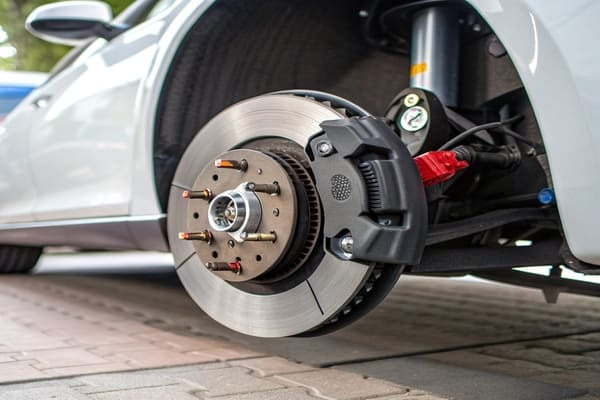
I remember my first time developing a custom ceramic brake pad for a client from Pakistan. I was still learning the nuances of different market demands. After installation, the feedback was that the pads felt a bit "soft" on the initial bite, even though they produced very little dust. I was worried, but the client was actually thrilled. Their customers preferred a smoother, more progressive braking feel over an aggressive bite. That experience taught me that "value" is subjective. The quiet operation and clean wheels were exactly what their market wanted.
Breaking Down the Long-Term Value
The "worth it" question is about more than just the price tag. It's about the total cost of ownership and the quality of the driving experience. A high-quality ceramic pad delivers value in several key areas.
1. Reduced Maintenance Costs
Because ceramic pads are less abrasive, they cause significantly less wear and tear on the brake rotors. Rotors are an expensive component to replace, so extending their life can lead to major savings over the life of the vehicle. Also, the pads themselves tend to last longer than organic or semi-metallic alternatives, meaning fewer replacements.
2. A Premium Driving Experience
You can't put a price on a peaceful drive. The noise from squealing brakes is one of the most common complaints from drivers. Ceramic pads are engineered to be virtually silent. Furthermore, the light-colored, minimal dust they produce keeps wheels looking clean, which is a big deal for owners of vehicles with intricate or high-end rims.
3. Consistent, Reliable Performance
For daily driving, consistency is key. Ceramic pads provide stable and predictable stopping power from the first stop of the day to the last, without the grabby feel that some metallic pads have. This reliability provides peace of mind for the driver.
Why are ceramic brake pads the best?
You hear that ceramic pads are the "best" option available. But is this just clever marketing, or is there real substance behind the claim? Let's uncover the technical reasons they are a top-tier choice.
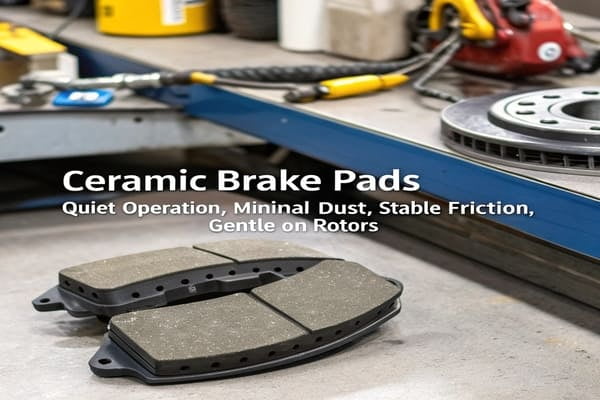
Ceramic brake pads are considered the best for daily driving because their advanced material composition provides an unmatched balance of comfort and performance. They deliver quiet operation, minimal dust, stable friction, and are extremely gentle on brake rotors, representing the peak of modern brake technology.
The superiority of a ceramic brake pad isn't magic; it's a result of incredibly precise and demanding manufacturing. Making a standard brake pad is one thing, but producing a ceramic pad that meets high friction stability standards is another level of engineering. Not all factories are equipped for it.
The Art and Science of Manufacturing
Producing a top-tier ceramic pad involves several critical stages, but one stands out as the most difficult.
### High-Temperature Curing
The most challenging step is the high-temperature curing process, where the ceramic fibers and proprietary resins are bonded together. This requires extreme precision. The temperature and pressure must be controlled perfectly to create a stable, uniform friction material. If this process is off by even a small margin, the pad's performance and durability are compromised. As a manufacturer, I know that only certain production lines, like those in the Fujian coastal region or near Shanghai, have the high-precision machinery required for this. Equipment from other regions often can't meet these strict standards.
### Stable Friction Formulation
A standard production line trying to make a ceramic pad often fails to achieve the required friction stability. Our process ensures that the coefficient of friction remains consistent across a wide range of temperatures, giving the driver smooth and predictable braking every time. This is what separates a premium product from a cheap imitation. It’s this commitment to manufacturing excellence that ensures the final product is not just good, but the best option for its intended use.
Conclusion
Ceramic brake pads offer a quiet, clean, and long-lasting solution for most drivers. While not for heavy-duty use, their balanced performance makes them a worthwhile upgrade for daily commuting.