
Confused about brake pads1 versus shoes? Choosing the wrong one can seriously impact your vehicle's safety and performance. Let's clarify which is truly better for specific needs.
Neither brake pads1 nor brake shoes2 are universally "better." Brake pads, used in modern disc brake systems3, offer superior performance and heat dissipation. Brake shoes, part of older drum brake systems4, are often more cost-effective and can provide a longer service life in certain applications.
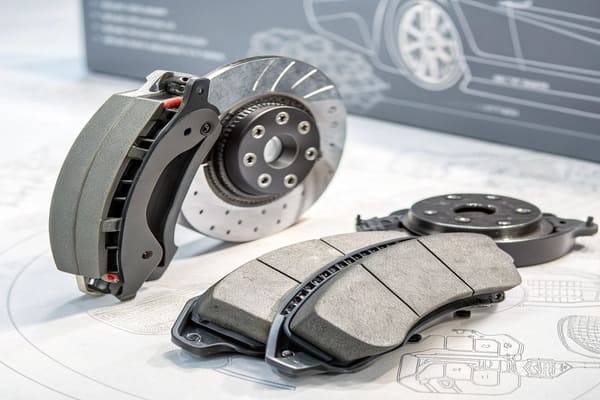
This simple answer, however, barely scratches the surface. As a manufacturer, I've seen how the real-world performance depends heavily on the vehicle's design, its intended use, and the quality of the components. The choice isn't just about a single part; it's about the entire braking system5. To truly understand this, we need to look at the specific questions our clients, from global distributors to brand developers, ask us every day. Let's dive deeper into the details that matter.
Are brake shoes2 better than pads?
Thinking brake shoes2 are just outdated technology? They actually excel in situations where brake pads1 can fall short. Let's explore if your vehicle or product line benefits from them.
Brake shoes can be the "better" choice for heavy-duty vehicles or as rear brakes on many passenger cars. They provide excellent stopping power due to their self-energizing design6 and are generally cheaper to produce and replace, offering a clear cost advantage for certain market segments.
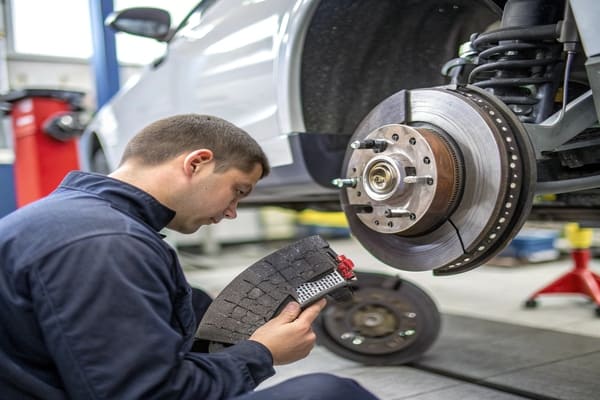
When we talk about "better," we have to define the criteria. For high-performance sports cars, pads are undeniably superior. But for a commercial truck or a budget-friendly sedan, the equation changes. Brake shoes operate inside a drum, and their design creates a "self-servo" or "self-energizing" effect. As the shoe makes contact with the spinning drum, the rotation of the drum wedges the shoe more firmly against it. This multiplies the braking force without requiring extra pressure from the driver. This is a huge advantage for heavy vehicles. Furthermore, the enclosed nature of the drum brake assembly protects the shoes from dirt, water, and road grime, which can contribute to a longer lifespan. As an OEM supplier, we often recommend drum brake systems4 for rear axles on vehicles where cost-control and longevity are top priorities for our clients.
Key Advantages of Brake Shoes
- Cost-Effectiveness: Manufacturing brake shoes2 and drums is typically less expensive than producing pads and discs (rotors). This is a major factor for vehicle manufacturers and parts wholesalers.
- Self-Energizing Action: Provides high braking force with less hydraulic pressure7, ideal for heavy loads and commercial applications.
- Integrated Parking Brake: The drum brake design makes it very simple and cheap to integrate a mechanical parking brake mechanism.
| Feature | Brake Shoes (in Drum Brakes) | Brake Pads (in Disc Brakes) |
|---|---|---|
| Primary Application | Rear axles, commercial vehicles8, budget cars | Front axles, performance cars9, most modern vehicles |
| Manufacturing Cost | Lower | Higher |
| Performance in Heat | Prone to fading | Excellent heat dissipation |
| Service Complexity | Higher | Lower |
Do I need brake pads1 or brake shoes2?
Unsure which brake components your project requires? This uncertainty can lead to sourcing the wrong parts, causing costly delays and compatibility issues. Let's determine what your vehicle actually needs.
You need the component that your vehicle's braking system5 was designed for. Most modern cars use brake pads1 in disc brakes on the front wheels, and either pads or shoes for the rear. Always check the vehicle's original specifications or visually inspect the wheels to be certain.
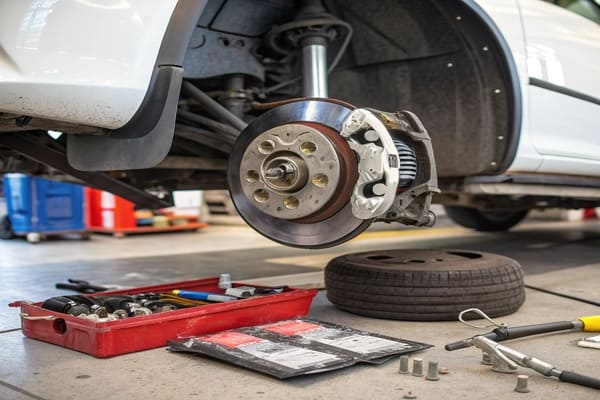
The most critical rule in our business is to match the part to the system. You cannot simply swap shoes for pads. They are components of two entirely different systems: drum brakes (shoes) and disc brakes (pads). The easiest way to check is to look through the spokes of your wheel. If you see a flat, shiny metal disc (the rotor) with a component clamped onto it (the caliper, which holds the pads), you have disc brakes. If you see a large, enclosed metal drum, you have drum brakes.
I learned this lesson the hard way early in my career. We were working with a new client from Pakistan who wanted to "upgrade" a fleet of vehicles. We supplied high-performance brake pads1. After installation, the client reported that the braking was "overly strong" and too sensitive. The new pads were too aggressive for the vehicle's master cylinder and overall hydraulic system design. Luckily, the client actually preferred this aggressive feel, so it worked out. But it was a stark reminder for me: a successful project isn't about supplying the "best" part in isolation. It's about supplying the right part that is perfectly harmonized with the entire vehicle's system, which requires access to the original design data—something most repair shops simply don't have.
How to Determine Your Needs
- Consult the Vehicle Manual: This is the most reliable source of information for a specific make and model.
- Visual Inspection: Look at the front and rear wheels. Most cars have disc brakes (pads) in the front, as they handle about 70% of the braking force. The rear can be either discs or drums.
- Consult a Professional Supplier: As a manufacturer, we have extensive databases. We help our B2B clients identify the exact OEM specifications10 to ensure 100% compatibility for their target market.
Do brake shoes2 last longer than pads?
Are you tired of dealing with frequent brake replacement11s for your fleet or product line? You might be wondering if one component simply offers a better service life than the other.
Generally, yes. Brake shoes in a drum brake system often last significantly longer than brake pads1 in a disc brake system. This is mainly because they have a larger friction surface area and are typically used on the rear axle, which handles far less of the braking load.
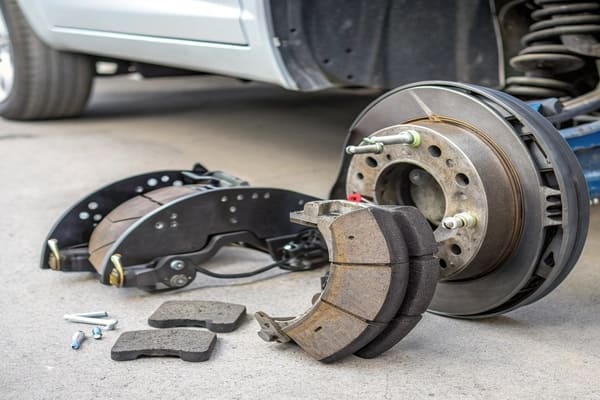
Several factors contribute to the impressive longevity of brake shoes2. First, as mentioned, the front brakes do most of the work. During a typical stop, the vehicle's weight shifts forward, placing immense stress on the front brake pads1 and rotors. The rear brakes, whether they are drums or discs, have a much easier job. Second, the physical design of a brake shoe gives it more friction material12 than a typical brake pad. With more material to wear away, it naturally lasts longer. Finally, the enclosed drum protects the shoes from the elements. Brake pads, on the other hand, are constantly exposed to rain, salt, and road debris, which can accelerate wear. For our wholesale and fleet clients, this longevity is a powerful selling point, as it translates directly to lower long-term maintenance costs.
Factors Affecting Brake Component Lifespan
- Driving Habits: Aggressive driving with hard stops wears out any brake component faster. City driving with frequent stops is harder on brakes than steady highway driving.
- Vehicle Load: Heavier vehicles require more braking force, leading to faster wear.
- Material Composition: For both pads and shoes, the friction material12 (e.g., organic, semi-metallic, ceramic) dramatically affects lifespan and performance.
| Component | Typical Lifespan (City Driving) | Typical Lifespan (Highway Driving) | Key Reason for Lifespan |
|---|---|---|---|
| Brake Pads (Front) | 25,000 - 40,000 miles | 50,000 - 70,000 miles | High braking load (70%) |
| Brake Shoes (Rear) | 50,000 - 70,000 miles | 80,000 - 120,000 miles | Low braking load, large surface area |
What is the difference between a brake pad and a brake shoe?
They both stop a vehicle, but they are not interchangeable. Understanding their core differences is fundamental to sourcing, manufacturing, and selling automotive parts successfully. Let's clarify this.
The primary difference is their shape and the system they work in. A brake pad is a flat block of friction material12 that squeezes a rotating disc (rotor). A brake shoe is a curved piece of metal with friction material12 that pushes outward against the inside of a spinning drum.
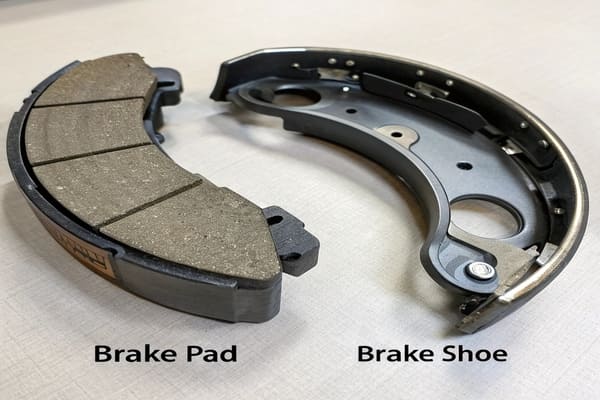
The difference goes far beyond their shape; it defines their performance characteristics. This is a topic where a deep, technical understanding is crucial. When we consult with clients developing a new product line, we emphasize that a simple visual comparison is not enough. A proper analysis requires sophisticated testing that most facilities, especially standard repair shops, cannot perform. For instance, accurately measuring braking efficiency and thermal decay characteristics requires specialized equipment. In my experience, you can find this level of precision in dedicated brake service centers, like those around Shanghai or in the coastal areas of Fujian, but it's rare elsewhere. This is why working with an experienced OEM manufacturer is so important.
System Design: Disc vs. Drum
The two components belong to entirely different systems. A disc brake system is open to the air, which allows for excellent heat dissipation. This is why they are favored for high-performance and front-axle applications where heat is the biggest enemy of performance. A drum brake system is enclosed, which traps heat. This can lead to "brake fade13," a dangerous condition where the brakes become less effective after repeated hard use.
Mechanism of Action
The way they apply force is also fundamentally different.
- Brake Pads: A caliper uses hydraulic pressure7 to clamp the pads against both sides of the disc. The force is direct and proportional to the pressure applied.
- Brake Shoes: A wheel cylinder uses hydraulic pressure7 to push the shoes outward. As they contact the drum, the rotation of the drum helps to wedge them tighter, creating the self-energizing effect.
| Characteristic | Brake Pad (Disc System) | Brake Shoe (Drum System) |
|---|---|---|
| Shape | Flat, rectangular block | Curved, crescent shape |
| Action | Clamps/Squeezes a disc | Expands/Pushes against a drum |
| Heat Dissipation | Excellent (open design) | Poor (enclosed design) |
| Performance | Consistent, fade-resistant | Prone to fade under heavy use |
| Maintenance | Simpler and faster to service | More complex, involves springs and clips |
Conclusion
Ultimately, choosing between pads and shoes isn't about which is better. It's about matching the right component to the vehicle's original design for optimal safety and performance.
Explore the benefits of brake pads, especially in modern vehicles, for superior performance and safety. ↩
Learn why brake shoes can be more effective for heavy-duty vehicles and certain applications. ↩
Understand the mechanics of disc brake systems and their advantages in performance. ↩
Discover the unique characteristics of drum brake systems and their applications. ↩
Learn about the critical factors that determine the best braking system for different vehicles. ↩
Find out how self-energizing designs enhance braking efficiency in drum brakes. ↩
Explore the role of hydraulic pressure in the effectiveness of brake systems. ↩
Learn about the most effective braking systems for heavy-duty and commercial applications. ↩
Explore the ideal brake components for high-performance vehicles. ↩
Learn about the significance of OEM specifications in ensuring compatibility and safety. ↩
Find out the signs that indicate it's time to replace your brake components. ↩
Learn about different friction materials and their impact on brake performance. ↩
Understand the phenomenon of brake fade and how it affects braking performance. ↩